

Metals MIning, Trade
Copper: The Metal Under Everything. Running Through One Narrow Belt in Central Africa
Oct
The Metal Under Everything
Every AI data centre, every EV, every grid upgrade on Earth needs it, and the mines can’t keep up. Copper’s story runs through one narrow belt in Central Africa — and, quietly, through a Ugandan mine that has sat idle since 1982.
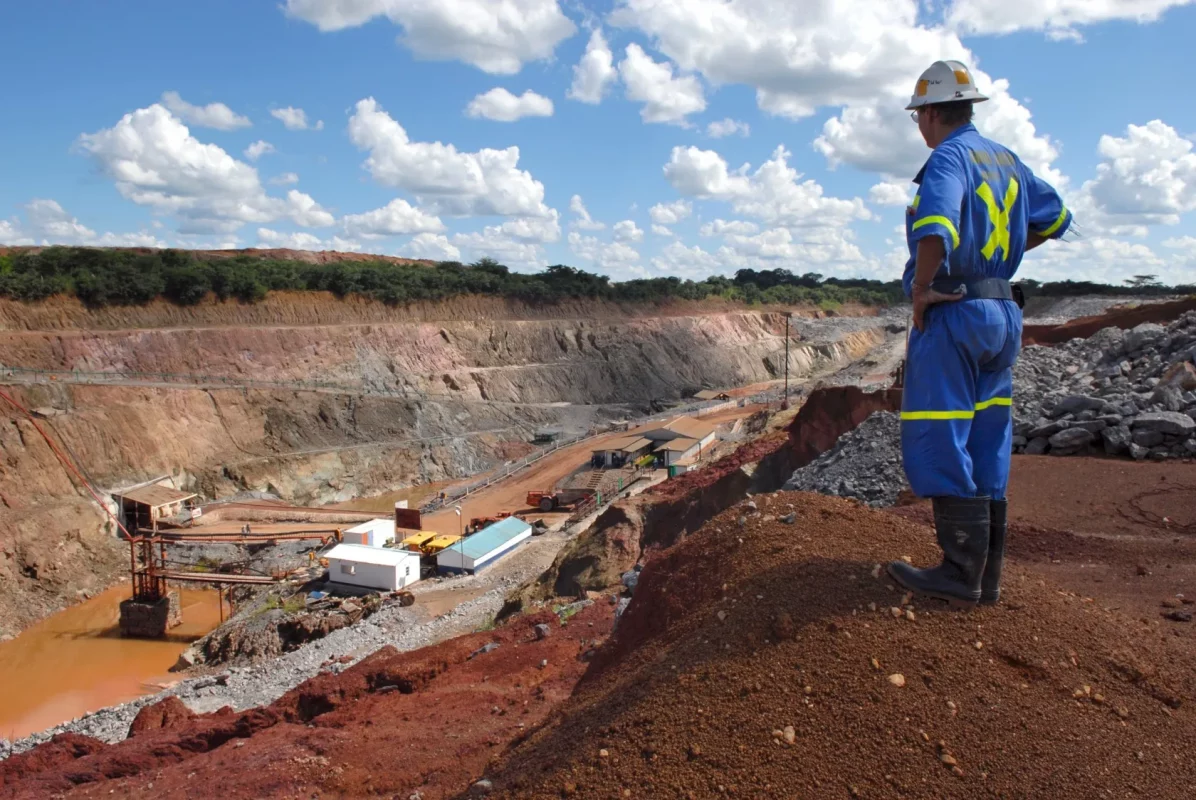
Copper does not have a single dramatic supply story the way gold or platinum do. It has dozens, all pointing the same direction at once. Every hyperscale AI data centre under construction needs 20–30 tonnes of copper per megawatt of capacity. Every electric vehicle needs three to four times the copper of a combustion equivalent. Every grid upgrade, every renewable installation, every defence modernisation programme needs more of it than the last one. And global mine supply, hobbled by ageing ore grades and a permitting timeline that now runs 15 to 20 years from discovery to first production, simply cannot keep pace. This issue traces that story from the trading floor down to a single mine in western Uganda that has sat dormant since 1982 and is, as of this year, finally coming back to life.
01 — The Global SqueezeAn AI Supercycle Meets a Mining Industry That Can’t Move Fast
Copper touched record levels near $14,000 per tonne in early 2026, and forecasts for where it goes next span an unusually wide range even by commodity standards — from Goldman Sachs’ relatively measured $10,000–$11,000 range to Citigroup’s call for $13,000–$15,000. The International Copper Study Group, which had projected a 2026 surplus as recently as late 2025, reversed course to forecast a 150,000-tonne deficit; J.P. Morgan’s own number is a deeper 330,000-tonne shortfall. The proximate causes are supply-side shocks — a mudslide at Freeport-McMoRan’s Grasberg mine in Indonesia, an earthquake-triggered flood at Kamoa-Kakula in the DRC — layered onto a slower-moving structural problem: global average ore grades have fallen from roughly 1.6% copper content in 1980 to under 0.8% today, meaning miners now have to process twice the rock for the same output.
What makes this cycle different from previous copper booms is the demand side. AI infrastructure is not a marginal add-on to traditional electrification demand — Trafigura estimates AI and data-centre-related copper demand could add a full 1 million additional tonnes by 2030, and BHP projects data-centre copper usage alone rising from around 500,000 tonnes a year today to roughly 3 million tonnes by 2050. Against a global market of 27–28 million tonnes annually, that is more than enough incremental demand to keep the market structurally tight even through the industry’s inevitable cyclical wobbles.
02 — The CopperbeltZambia, the DRC, and the Race to the Atlantic
Nearly all of this story runs through one geological formation: the Central African Copperbelt, straddling southern DRC and northern Zambia. The DRC produced an estimated 3.5 million tonnes of copper in 2025 — the world’s second-largest national output after Chile — while Zambia posted a record 890,346 tonnes, an 8% increase on 2024. The single most important asset in that belt right now is Ivanhoe Mines’ Kamoa-Kakula complex near Kolwezi, which brought online Africa’s largest and greenest copper smelter in late 2025: a 500,000-tonne-per-year direct-to-blister facility producing 99.7%-pure copper anodes, a genuine step up the value chain from raw concentrate.
| Project | Location | Detail |
|---|---|---|
| Kamoa-Kakula | DRC (Kolwezi) | Ivanhoe/Zijin; 2026 guidance 290,000–330,000t contained copper; new 500,000t/yr smelter |
| Mingomba | Zambia | KoBold Metals (Gates/Bezos-backed AI exploration) + ZCCM-IH; ~$2.3bn investment targeting 300,000+ t/yr, first output early 2030s |
| Konkola Copper Mines | Zambia | State-controlled revival following resolution of Vedanta Resources dispute |
| Kansanshi & Lumwana | Zambia | First Quantum Minerals and Barrick expansions supporting the government’s 1 million-tonne 2026 target |
Getting that copper to market is its own contest. For decades, Copperbelt output has moved south and east — by truck and rail to Durban in South Africa, or Dar es Salaam in Tanzania — routes that can take three weeks or more. The Lobito Corridor, a US- and EU-backed rehabilitation of the century-old Benguela Railway running from the DRC border to Angola’s Atlantic coast, cuts that to about a week. In March 2026, Trafigura, Aurubis and Kamoa Copper completed the first commercial sale of copper anodes moved via the route — a genuine proof of concept rather than just an infrastructure announcement. An 800km greenfield extension into Zambia broke ground in February 2026, though realistic completion sits in the 2028–2029 range. China, for its part, is pursuing a parallel eastbound answer: reviving the old TAZARA railway to Dar es Salaam.
It is the West’s answer to China’s long dominance of African copper and cobalt.Rio Times, on the Lobito Corridor, June 2026
03 — The Regional StoryUganda’s Kilembe Mine, Waking Up After 43 Years
Fava Herb’s own operating footprint sits just outside the main Copperbelt — but not as far outside as it might appear. Uganda’s Kilembe Mines, in the foothills of the Rwenzori Mountains near the DRC border, was once the backbone of the country’s economy: at its 1970 peak it produced roughly 18,000 tonnes of copper cathode a year, and copper ranked alongside coffee and cotton as one of Uganda’s three great foreign-exchange earners. Falconbridge halted operations in 1982 amid a global copper price collapse, ageing equipment and political instability, and the site sat under care and maintenance — flooded shafts, a decaying smelter in Jinja — for over four decades.
That changed on 3 March 2025, when the Ugandan government signed its first-ever Mineral Production Sharing Agreement, awarding redevelopment rights to local firms Sarrai Group and Nile Fibreboard after a competitive process involving 14 bidders. Government geologists estimate the site holds somewhere between 4 million and 6.5 million tonnes of ore grading roughly 1.77–1.98% copper, alongside a separate cobalt-rich resource — figures that have varied across official statements but consistently point to Uganda’s largest copper deposit by a wide margin. Total investment is estimated at $230–250 million. Asset handover from the dissolved Kilembe Mines Ltd to the state-owned Uganda National Mining Company completed in April–May 2025, formally ending the 43-year hiatus and clearing the way for redevelopment.
What distinguishes this revival attempt from earlier failed efforts — including a cancelled 2013 concession with China’s Tibet Hima — is an explicit value-addition mandate: officials have stated the goal is producing copper cathodes and cobalt metal on-site, not exporting raw ore, with a smelter and refinery planned as part of the redevelopment rather than an afterthought. It is the same beneficiation thesis running through gold, iron ore and platinum in this series, applied to Uganda’s own slice of the Copperbelt geology.
04 — OutlookWhat We Are Watching Into Year-End
- AI DemandWhether hyperscale data-centre buildout continues at its current pace is now a bigger swing factor for copper prices than traditional industrial cycles.
- Lobito ExtensionProgress on the 800km Zambia leg will determine whether the corridor becomes a genuine alternative for Zambian, not just Congolese, copper by decade’s end.
- Kilembe FinancingWhether Sarrai Group and Nile Fibreboard move from signed agreement to funded construction is the clearest near-term signal for Uganda’s copper ambitions.
- Grade DeclineThe slow, structural decline in global ore grades means even good news on individual mines won’t fully resolve the deficit story.
Fava Herb Metals & Mining Intelligence Report: COPPER
Institutional-grade market intelligence on Africa’s metals and mining sector — global price forecasts, country-level production data, and East African trade and refining analysis, from Fava Herb’s Commodities Desk. A licensed, sourced data product for traders, investors, and trade financiers.

Book: Returning To Nature’s Ancient Pharmacy -An African Approach To Natural Remedies
What You’ll Discover:
- Daily Herbal Remedies backed by Scripture and tradition
- Natural healing foods like raw honey, fermented drinks, and superfruits
- Uses of animal fats like tallow, ghee, and bone broth
- African healing plants like hibiscus, tamarind, and baobab
- Teas and Adaptogens for stress, energy, and hormone balance
- Spiritual insights on God’s design for healing and wellness
- Practical recipes, homemade remedies, and devotional reflection

