
Agriculture, Trade
Camels: The Herd Built for a Changing Climate, Trade Data and Statistics
Sep
Fava Herb Livestock Report — Issue IV of V
Camels: The Herd Built for a Changing Climate
Kenya produces more camel milk than any country on Earth, yet loses half of it before it reaches a buyer. Ethiopia sends camels north to Sudan and Egypt on a corridor where prices have historically outrun every other livestock species. As drought reshapes East African rangelands, the camel economy is where climate adaptation and commodity opportunity meet.
Camels occupy a strange position in East Africa’s livestock economy: simultaneously under-counted, under-financed, and increasingly central to how pastoralist communities are adapting to more frequent and more severe drought. Kenya alone hosts an estimated 4.72 million camels and produces more camel milk than any other country in the world — yet the value chain around that milk is so underdeveloped that roughly half of it never reaches a paying customer.
01A regional herd, concentrated where the climate is hardest
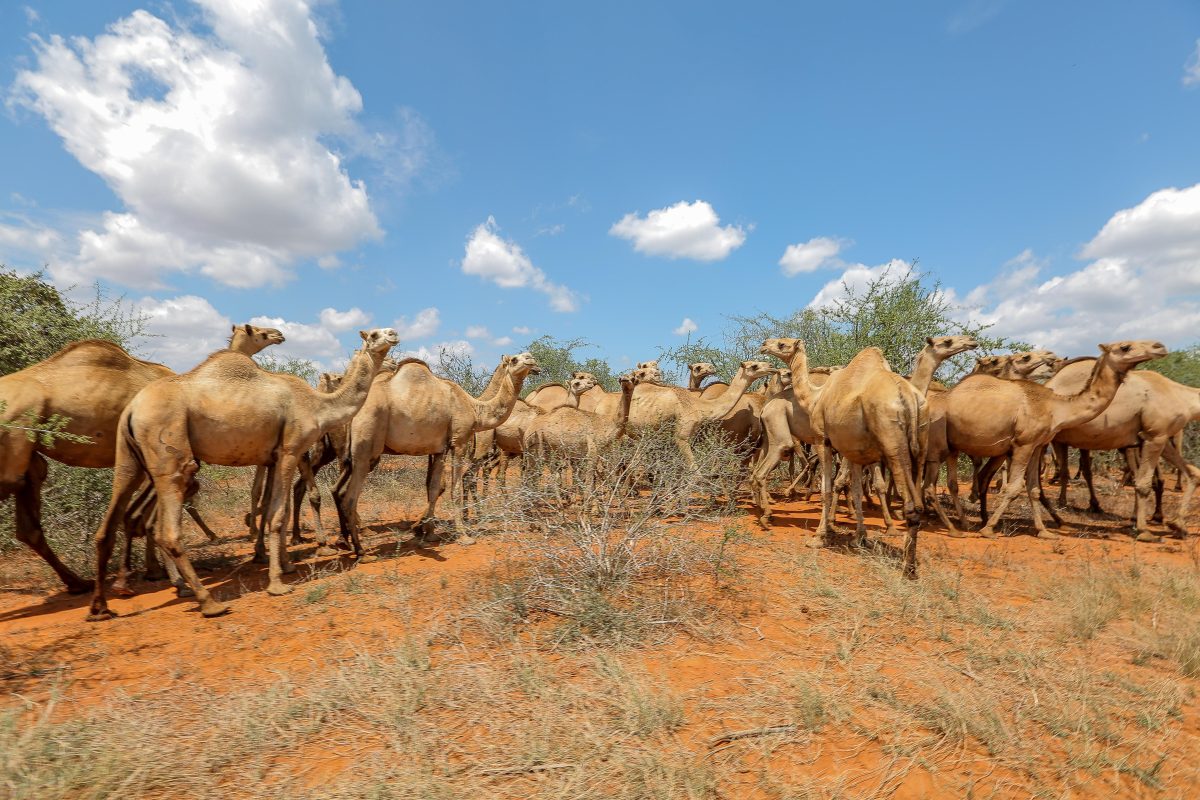
The Horn of Africa holds one of the world’s largest concentrations of camels. The IGAD region — Djibouti, Eritrea, Ethiopia, Kenya, Somalia, South Sudan, Sudan and Uganda — hosts 19.1 million of a global estimate of 41.8 million camels, meaning close to half the world’s camels live in this single region. Camels are concentrated in the driest, most drought-exposed rangelands: Kenya’s population of roughly 4.72 million is held mainly by pastoral communities in the north-east, while Ethiopia’s camels are concentrated in Afar, the Ethiopian Somali region, and eastern and southern Oromia.
This concentration is not accidental. As climate variability increases, camels have become the species of choice for pastoralists rebuilding herds after drought, because they tolerate heat, water scarcity and poor forage better than cattle. Peri-urban camel keeping is now expanding in towns like Isiolo in Kenya and Kismayu in Somalia, reflecting easier access to urban milk markets as much as changing climate conditions.
02The milk that never reaches market
Kenya’s position as the world’s leading camel milk producer is a genuine, underappreciated commodity story: 1.165 million tonnes annually, ahead of Somalia (0.958 million tonnes) and Mali (0.271 million tonnes). Global market sizing puts the camel milk market at US$323 billion as of 2023, reflecting both direct consumption and the growing premium and specialty-dairy segment camel milk occupies internationally.
Yet Kenyan camel milk producers are estimated to lose up to 50% of their milk output due to poor hygiene practices, limited cold storage facilities, and inadequate transport infrastructure connecting pastoral production areas to urban demand centres. This is arguably the single largest value-destruction point in any livestock category covered in this series — a loss rate far higher than the formalisation gaps documented in the Beef & Cattle or Poultry issues, and one that is purely infrastructural rather than structural or seasonal.
Between 2005 and 2025, researchers documented at least ten outbreaks of “undiagnosed” or “mysterious” diseases affecting camels across Kenya, Somalia and Ethiopia. Because camel health, genetics and productivity remain comparatively under-researched relative to cattle, these outbreaks pose risks not only to animal health but to public health and regional trade — a compounding factor on top of the storage and hygiene losses already affecting the milk value chain.
03Ethiopia’s live export corridor: Sudan, then Egypt
Where Kenya’s camel story is primarily about milk, Ethiopia’s is primarily about live export. Ethiopia’s official camel population is recorded at 1.42 million, though independent research estimates run as high as 4.8 million — a gap reflecting how much of the country’s camel economy sits outside formal statistical systems. Camels are exported live from Ethiopia through official routes including Galafi–Djibouti and Jijiga–Berbera, alongside substantial informal cross-border flows to Sudan, Kenya, Somalia and Djibouti; a Ministry of Trade study found close to 1,200 animals of all species are illegally traded across Ethiopia’s borders every day.
Camel prices in Ethiopia have shown a distinctive pattern: prices reportedly doubled within two years during a period of rising export demand, driven initially by growing exports to Sudan and then onward re-export to Egypt. Geographic proximity to Egypt and the Gulf makes both live camel exports and chilled camel meat exports commercially viable from Ethiopia in a way that is harder to replicate from Kenya’s more southerly camel-producing regions.
| Country | 2024 live camel export value to Middle East | Notes |
|---|---|---|
| Sudan | US$107 million | Largest live camel exporter in the region |
| Somalia | US$80 million | Second-largest; camels alongside dominant sheep/goat trade |
Source: CGIAR, “As the climate changes, camels offer stability in the Horn of Africa,” 2026.
“Average camel prices in Ethiopia have doubled in just the past two years… due to increasing camel export to Sudan and then eventually to Egypt.”
04What this means for sourcing and finance
Camels present two distinct opportunities that rarely appear in the same species elsewhere in this series. The first is a pure infrastructure play: closing even a fraction of Kenya’s 50% camel milk loss rate through cold-chain investment, aggregation centres, and hygiene training would unlock volume that is already being produced, not volume that needs to be grown — a materially different risk profile from most agricultural financing, which typically bets on production growth rather than loss reduction.
The second is a live-export corridor play modelled on Ethiopia’s Sudan-to-Egypt pattern, where camel prices have historically outrun other species during periods of rising Gulf and North African demand. Because camel health and productivity data remain comparatively sparse compared to cattle, sheep and goats, any financing structure in this space should build in a wider disease and health-shock risk margin than the equivalent cattle or shoat facility, given the documented pattern of unexplained regional outbreaks.
The full Camels data brief
This issue’s standalone PDF goes deeper: a cold-chain investment case for Kenya’s camel milk sector, Ethiopia’s Sudan-Egypt live export corridor economics, disease-risk mapping across the IGAD camel herd, and financing structures for both the milk-loss-reduction and live-export opportunities.
DOWNLOAD THE FULL REPORT →The Fava Herb Livestock Report — East Africa’s Livestock Trade, Decoded: Camels
A five-part market intelligence series on East Africa’s livestock economy — beef & cattle, poultry, goat & sheep, camels, and pigs. Each report pairs a free blog post with an in-depth, licensed PDF data brief covering production volumes, cross-border trade corridors, export markets, and financing risk across Kenya, Uganda, Ethiopia, South Sudan and the wider Horn of Africa.

Book: Returning To Nature’s Ancient Pharmacy -An African Approach To Natural Remedies
What You’ll Discover:
- Daily Herbal Remedies backed by Scripture and tradition
- Natural healing foods like raw honey, fermented drinks, and superfruits
- Uses of animal fats like tallow, ghee, and bone broth
- African healing plants like hibiscus, tamarind, and baobab
- Teas and Adaptogens for stress, energy, and hormone balance
- Spiritual insights on God’s design for healing and wellness
- Practical recipes, homemade remedies, and devotional reflection

