
Nov
Fava Herb Fish & Aquaculture Report — Issue IV of V
Nigeria Catfish: The Import Paradox
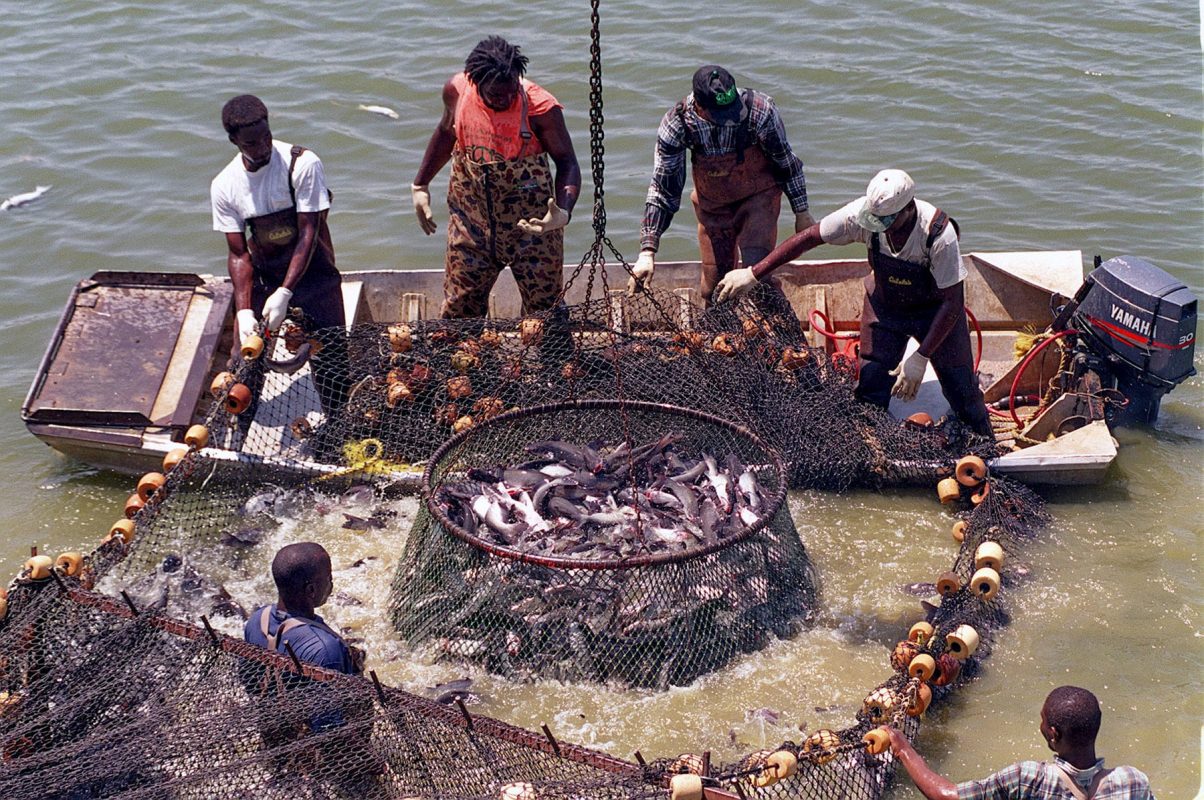
Nigeria farms more catfish than any country on Earth and produces over half of Sub-Saharan Africa’s farmed fish. It still imports roughly two-thirds of the fish it eats. This is a story about a production ceiling, not a demand problem.
Every other issue in this series has centred on East Africa’s Great Lakes. Nigeria’s aquaculture sector operates on an entirely different system — inland ponds and tanks rather than a shared lake, catfish rather than tilapia or Nile perch as the dominant farmed species — and at a scale that dwarfs anything covered so far. Nigeria is the world’s leading producer of North African catfish and contributes over half of all farmed fish produced in Sub-Saharan Africa. It is also, paradoxically, a country that imports most of the fish its population eats.
01Africa’s aquaculture powerhouse, still an importer
Fish and seafood contribute roughly 40-44% of Nigeria’s per capita animal protein intake, making this one of the most consequential food-security categories in the country. Nigeria’s annual demand for fish and seafood runs to approximately 3.6 million metric tonnes. As of the end of 2025, total domestic production had reached about 1.4 million metric tonnes, up from 1.1 million tonnes the year before — genuine progress, but still leaving a gap of well over 2 million tonnes filled by imports from countries including Chile, the Netherlands, the Faroe Islands, Iceland and Ireland.
02Catfish, overwhelmingly
Within Nigeria’s aquaculture sector, one species dominates almost completely: catfish farming (Clarias gariepinus, “North African Catfish”) accounts for more than 80% of national aquaculture production. Nigeria farmed 165,000 tonnes of this species in 2022 alone, making it the world’s leading producer. The broader aquaculture sector’s growth has been dramatic on a multi-decade view — rising from just 20,458 tonnes in 1998 to 291,233 tonnes by 2018 — though growth has been driven primarily by market demand rather than coordinated productivity gains, leaving structural constraints largely unaddressed.
Catfish’s dominance rests on practical advantages: the species is tough, tolerant of variable water quality, broadly accepted across Nigerian cuisine, and commercially reliable. Production cycles run as short as four months from stocking to harvest — a fast turnaround that, in principle, should make catfish farming an attractive target for working-capital financing, since capital tied up in a single cycle is recovered quickly relative to most agricultural commodities in this report series.
03The same feed wall, a different species
Feed is, once again, the central financial reality of the business — a pattern this series has now documented independently in poultry, and now catfish. Feed consumes between 60% and 70% of total production costs on a well-run Nigerian catfish farm. As of early 2026, a 15-kilogram bag of locally produced floating catfish feed cost approximately \u20a69,000, while imported feed ran \u20a611,000 and above — a meaningful premium that pushes cost-conscious farmers toward local feed even where imported formulations may offer better feed-conversion performance.
Most Nigerian catfish farmers currently finance their operations through personal savings, informal credit, or cooperative arrangements rather than bank loans, since conventional lending rates rarely make sense for a business with catfish farming’s margin structure. In December 2025, Nigeria’s Minister of Marine and Blue Economy announced that government discussions with financial institutions were underway to facilitate single-digit interest loans for fish farmers nationwide — an acknowledgment, at the policy level, that the sector’s production ceiling is at least as much a financing problem as a technical or biological one.
04A policy apparatus finally catching up
Nigeria’s federal government has begun treating fisheries and aquaculture as a distinct policy priority rather than a subset of general agriculture. A standalone Federal Ministry of Marine and Blue Economy was created under the current administration, separating the sector from the broader agriculture ministry it had previously been folded into. The National Fisheries and Aquaculture Policy 2025-2029 sets a formal target of raising aquaculture production to 1.3 million metric tonnes and cutting post-harvest losses by 50% — an implicit acknowledgment that losses after the fish leaves the pond, not just production volume, are a meaningful part of the supply gap.
| Metric | Figure |
|---|---|
| Nigeria’s annual fish demand | ~3.6 million MT |
| Domestic production (2025) | ~1.4 million MT |
| Catfish share of aquaculture production | >80% |
| Nigeria’s 2022 catfish output | 165,000 MT (world’s largest producer) |
| Feed share of catfish production cost | 60\u201370% |
| National Policy 2025\u20132029 aquaculture target | 1.3 million MT, with 50% cut in post-harvest losses |
“Local fish output had grown to 1.4 million metric tonnes from 1.1 million the year before. Progress, but still far short of what the country consumes.”
05What this means for sourcing and finance
Nigeria’s catfish sector is, on the numbers, the single largest addressable financing opportunity in this entire report series. A ~2.2 million tonne annual import gap, a fast four-month production cycle, and an explicit government acknowledgment that credit access — not technical capacity — is the binding constraint together describe a sector genuinely starved of the kind of structured agricultural finance Fava Herb already provides elsewhere in East Africa. The short cycle length in particular changes the risk calculus relative to livestock or slower-growing fish species: capital recycles roughly three times a year under normal conditions, materially improving the economics of even a modest interest-rate premium over the single-digit rates the government is currently negotiating.
Feed-cost financing is the other clear entry point, mirroring the structure that makes sense in this series’ Poultry issue: with feed at 60-70% of production cost, forward contracts or input-financing arrangements tied to feed millers would directly de-risk the sector’s largest cost line. Given the post-harvest loss target embedded in the new national policy, cold-chain and processing infrastructure investment — reducing losses between pond and market — represents a second, complementary opportunity alongside direct production financing.
The full Nigeria Catfish data brief
This issue’s standalone PDF goes deeper: a four-month production-cycle financing model, feed-cost sensitivity analysis, the National Fisheries and Aquaculture Policy 2025-2029 in detail, and financing structures built around Nigeria’s emerging single-digit-rate lending initiative.
DOWNLOAD THE FULL REPORT →The Fava Herb Fish & Aquaculture Report — East Africa’s Fisheries Trade, Decoded: Nigeria Catfish & Aquaculture
A five-part market intelligence series on East Africa’s fish and aquaculture economy — Nile perch, tilapia, small pelagics, Nigerian catfish, and coastal shrimp, prawn and seaweed farming. Each report pairs a free blog post with an in-depth, licensed PDF data brief covering production volumes, export markets, value chains, and financing risk across Kenya, Uganda, Tanzania, Rwanda and Nigeria.

Book: Returning To Nature’s Ancient Pharmacy -An African Approach To Natural Remedies
What You’ll Discover:
- Daily Herbal Remedies backed by Scripture and tradition
- Natural healing foods like raw honey, fermented drinks, and superfruits
- Uses of animal fats like tallow, ghee, and bone broth
- African healing plants like hibiscus, tamarind, and baobab
- Teas and Adaptogens for stress, energy, and hormone balance
- Spiritual insights on God’s design for healing and wellness
- Practical recipes, homemade remedies, and devotional reflection

