
Agriculture, Trade
East Africa Pig Trade: Uganda’s $500 Million Domestic Trade
Nov
Fava Herb Livestock Report — Issue V of V
Pigs: Uganda’s $500 Million Domestic Trade
No Gulf corridor, no Hajj season, no halal certification chain — pork is the one livestock category in this series that trades entirely within East Africa. Uganda has built a smallholder, women-led pig economy sixteen times the size of Kenya’s, and Kenya now imports its way around a structural pork deficit.
Pigs close out this series as the outlier. Every other issue — beef, poultry, goats and sheep, camels — has an export or cross-border dimension pointed at the Gulf, North Africa, or at minimum a neighbouring EAC market. Pork has none of that. It is not a halal-certifiable export category, so the entire value chain, from breeding stock to the pork joint, is built for domestic and regional East African consumption — and Uganda has built it at a scale that dwarfs every other country in the bloc.
01Uganda’s pig economy, at sixteen times Kenya’s scale
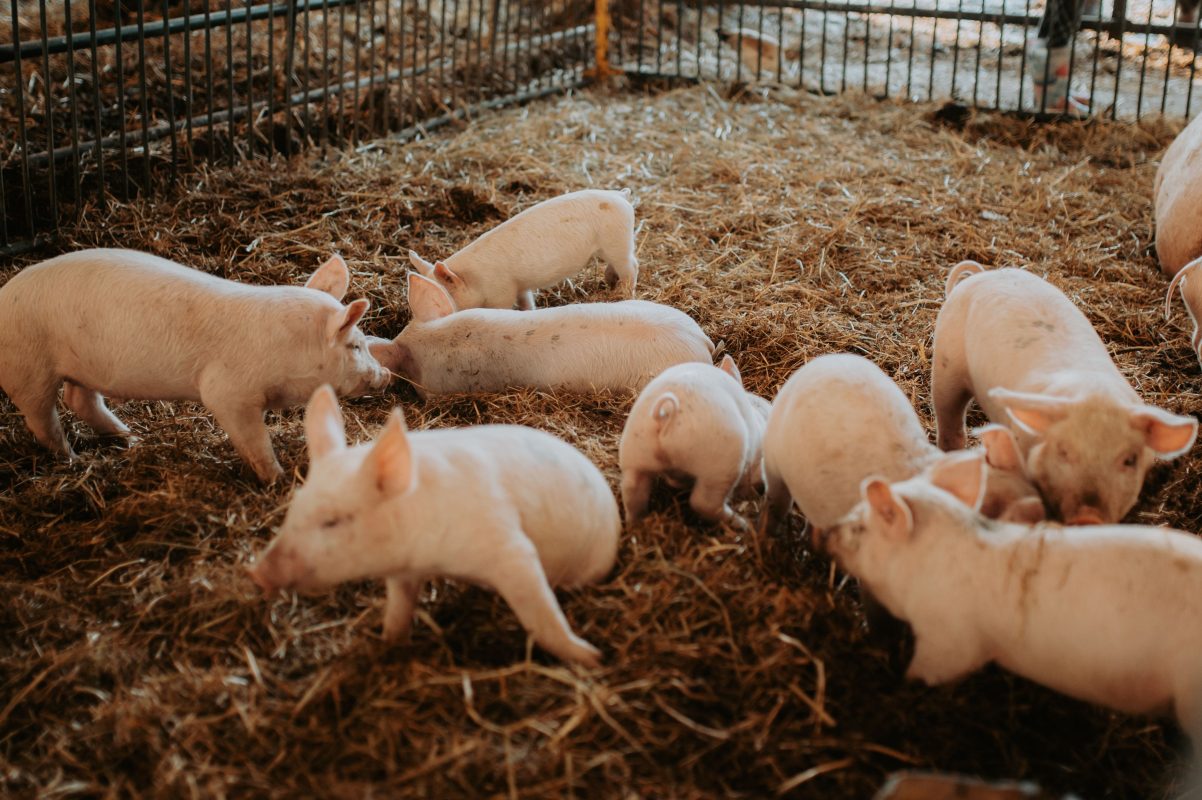
Uganda’s 2021 National Livestock Census recorded a national pig herd of 7.1 million, with more than 2.2 million households depending on pig farming. Kenya’s pig population, by contrast, stands at roughly 443,000 — meaning Uganda’s herd outnumbers Kenya’s by a factor of approximately sixteen. Uganda also holds the highest per-capita pork consumption in East Africa, estimated at 3.4 to as much as 4.5 kilograms per person per year, far outstripping both Kenya and Tanzania.
The sector’s growth trajectory has been steady rather than explosive: Uganda’s pig population grew from 0.67 million in 1991 to 1.4 million in 1997, 2.3 million by 2005/06, and past 3 million by 2008, before accelerating toward the 7.1 million recorded in the 2021 census. The International Livestock Research Institute now values Uganda’s pig sector at over US$500 million (roughly KES 65 billion).
New data from the International Livestock Research Institute shows women make up 65% of Uganda’s smallholder pig producers, and a single litter of piglets can cover school fees for multiple children in a household. What was once treated as a marginal livestock activity, largely ignored by formal agricultural policy, has become a primary driver of women’s economic empowerment in rural Uganda — a pattern increasingly cited as a policy model for other East African pig sectors, including Kenya’s.
02Kenya’s structural pork deficit
Kenya’s pig sector is small and geographically concentrated, centred largely in Kiambu and Murang’a counties. The country runs an annual pork deficit of approximately 15%, currently plugged by imports from Uganda worth an estimated KES 5 billion. This is a rare case in this report series of one EAC neighbour running a genuine, structural, ongoing supply deficit that another neighbour fills as a matter of course — not an occasional trade flow but the normal state of the market.
The commercial upside for Kenya is explicit in industry commentary: adopting Uganda’s “gender-blind” livestock policy approach and decentralised veterinary support is seen as a path for Kenya to domesticate a meaningful share of that KES 5 billion import value rather than continuing to rely on Ugandan supply indefinitely.
03Genetics as the commercialisation lever
Uganda’s pig sector’s shift from subsistence to commercial production has been driven substantially by genetics investment. Prime Pork Uganda Limited, which began in 2012 with just seven pigs, partnered with France’s Choice Genetics in 2015 to import grandparent breeding stock suited to lean, meat-focused carcasses rather than the fattier local breeds historically kept by smallholders. A subsequent partnership with Brine enabled local semen production for artificial insemination — cutting costs from roughly UGX 100,000 per imported dose to about US$10 (roughly UGX 36,600) for a locally produced dose, while also reducing disease transmission associated with traditional village boars. In 2025, Prime Pork extended this model further, partnering with France’s Nucleus for a license to multiply its genetics across East Africa.
| Metric | Uganda | Kenya |
|---|---|---|
| National pig herd | 7.1 million (2021 census) | ~443,000 |
| Per-capita pork consumption | 3.4\u20134.5 kg/year (highest in EA) | Lower; partly import-dependent |
| Sector value | US$500M+ (ILRI) | Smaller, concentrated in Kiambu & Murang’a |
| Trade position | Net regional supplier | ~15% annual deficit, filled by Uganda (~KES 5bn) |
Disease remains the sector’s primary production risk on both sides of the border. Studies of Uganda’s smallholder pig sector have found total morbidity from five major diseases — African Swine Fever, foot and mouth disease, helminthosis, mange and related skin conditions, and diarrhoeal disease — running at roughly 31%, with corresponding mortality around 23%. African Swine Fever in particular carries outsized trade risk, since outbreaks can trigger movement restrictions that disrupt the cross-border flow Kenya currently depends on.
“Women now dominate Uganda’s $500M pig industry as social norms shift, providing a powerful economic blueprint for the entire East African region.”
04What this means for sourcing and finance
Pigs are the clearest domestic-demand play in this entire series. There is no Gulf corridor to monitor, no Hajj-season concentration risk, no halal certification requirement shaping which markets are reachable — the entire opportunity is East African household and food-service demand, growing steadily as urbanisation and incomes rise. For Fava Herb’s footprint across Kenya, Uganda, Rwanda, Ethiopia and South Sudan, that makes the sector unusually legible: the question is not which export market to chase, but how to capture more of the value in an already-proven regional trade flow.
Two entry points stand out. First, Kenya’s KES 5 billion annual import dependency on Uganda is a defined, quantifiable gap that genetics-and-feed-financing structures (mirroring Prime Pork’s model) could address directly, either by supporting Kenyan commercial producers or by financing formalised trade relationships with Uganda’s established supply base. Second, African Swine Fever and related disease risk should be priced explicitly into any lending or off-take structure in this sector, given documented morbidity rates around 31% and the outbreak-driven trade disruptions the disease is known to cause regionally.
The full Pigs data brief
This issue’s standalone PDF goes deeper: a Uganda-Kenya trade flow and pricing model, the Prime Pork genetics-commercialisation case study in full, African Swine Fever outbreak history and risk mapping, and financing structures for both Kenyan production and cross-border trade formalisation.
DOWNLOAD THE FULL REPORT →This completes the five-issue Fava Herb Livestock Report series: Beef & Cattle, Poultry, Goat & Sheep, Camels, and Pigs.
The Fava Herb Livestock Report — East Africa’s Livestock Trade, Decoded: Pigs
A five-part market intelligence series on East Africa’s livestock economy — beef & cattle, poultry, goat & sheep, camels, and pigs. Each report pairs a free blog post with an in-depth, licensed PDF data brief covering production volumes, cross-border trade corridors, export markets, and financing risk across Kenya, Uganda, Ethiopia, South Sudan and the wider Horn of Africa.

Book: Returning To Nature’s Ancient Pharmacy -An African Approach To Natural Remedies
What You’ll Discover:
- Daily Herbal Remedies backed by Scripture and tradition
- Natural healing foods like raw honey, fermented drinks, and superfruits
- Uses of animal fats like tallow, ghee, and bone broth
- African healing plants like hibiscus, tamarind, and baobab
- Teas and Adaptogens for stress, energy, and hormone balance
- Spiritual insights on God’s design for healing and wellness
- Practical recipes, homemade remedies, and devotional reflection

