

Metals MIning, Trade
Irony In African Heavy Industry: Sitting on Ore, Importing Steel
Sep
Sitting on Ore, Importing Steel
Nigeria and Uganda hold billions of tonnes of iron ore between them. Nigeria still imports $3.3 billion of steel a year. Uganda imports two-thirds of its own steel-making raw material. This is the story of why abundance hasn’t been enough.
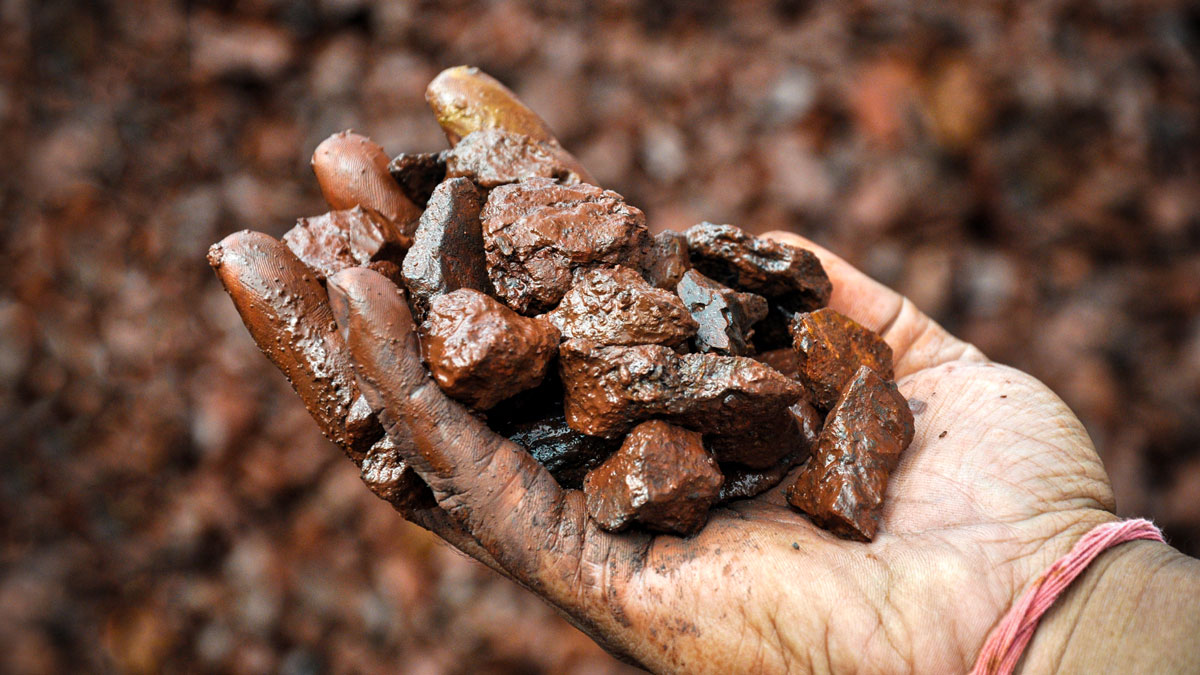
There is a particular kind of irony in African heavy industry, and iron ore captures it better than almost any other commodity. Nigeria’s Itakpe deposit alone holds an estimated 3 billion tonnes of ore — enough, by the government’s own reckoning, to run a fully integrated steel industry for decades. Uganda’s Muko and Sukulu deposits add a further 260 million-plus proven tonnes, with some surveys suggesting the true regional endowment tops a billion tonnes. And yet both countries remain overwhelmingly dependent on imported steel. This issue asks why — and uses the recent closure of Kenya’s Kwale titanium mine as a cautionary companion story about what happens when a mineral resource, once developed, eventually runs out.
01 — The Global BackdropA Market Trending Down, Not Up
Unlike gold, platinum or copper, iron ore enters the second half of 2026 as one of the few major metals where most forecasters agree prices are heading lower, not higher. The World Steel Association projects global steel demand at approximately 1.72 billion tonnes for 2026, but the supply side is loosening faster than demand is growing — largely because of Guinea’s giant Simandou project, which is expected to add roughly 20 million tonnes of high-grade (65%+ Fe) ore to the seaborne market as early as 2026, deepening an already-present global surplus.
| Institution | 2026 Iron Ore Forecast |
|---|---|
| Vale | ~$100/t (raised from $90/t long-term view) |
| Macquarie | $103/t average |
| Fitch Ratings | $100/t (raised from $95/t) |
| Deutsche Bank | $106/t Q1; $102/t full-year average |
| Goldman Sachs | $93/t (raised from $88/t) |
| World Bank | $97/t, declining a further 2% in 2027 |
| Citi | $85/t (low end of consensus) |
| GMK Center consensus | ~$94/t average |
Layer onto that a regulatory shift with real African consequences: the EU’s Carbon Border Adjustment Mechanism entered its definitive enforcement phase on 1 January 2026, applying a carbon levy to imported steel equivalent to what EU producers pay under the bloc’s own emissions trading scheme. For any African producer with export ambitions — Nigeria and Uganda both included, eventually — this raises the bar for what “competitive” steel production will need to look like from the outset.
02 — NigeriaItakpe, Ajaokuta, and Four Decades of Almost
Nigeria’s iron ore story is really the story of one unfinished steel plant. The Ajaokuta Steel Complex, conceived in 1979 as a Soviet-backed flagship of African industrialisation, was structurally complete by 1994 and has never produced steel at commercial scale in over four decades. Its intended feedstock, the Itakpe mine in Kogi State, was built to supply it — but with its principal offtaker dormant, Itakpe has spent most of its operating life running far below the 2.15 million-tonne annual capacity it was designed for, even as Nigeria imports the vast majority of the roughly 10 million tonnes of steel it consumes each year.
Nigeria’s Itakpe-Ajaokuta chain today: stuck at the first link, most years.
The technical problem compounds the political one. Itakpe ore runs at roughly 32–35% iron content — low grade by seaborne-export standards — and requires beneficiation to be usable in a blast furnace, a processing step Nigeria has historically lacked the capacity to perform at scale. Domestic steel production, at roughly 1.2 million tonnes a year, is overwhelmingly scrap-based rather than ore-based; only around 10% of even that modest output has historically come from Itakpe ore itself. The resulting import bill runs to an estimated $3.3 billion a year.
2024–2026 has brought the most serious revival push in a generation, on two competing tracks. In September 2024, Nigeria signed an MoU with a Russian consortium — Tyazhpromexport (the plant’s original 1979 builder), Novostal-M and Proforce Manufacturing — to rehabilitate both Ajaokuta and Itakpe’s parent company, NIOMCO. By early 2026, a parallel $2 billion Chinese-backed plan had emerged, following a technical assessment by a Chinese investor selected from a shortlist of roughly ten candidates, alongside a new 20-year gas supply agreement intended to solve the plant’s chronic power problem. The government has separately reiterated that Itakpe’s 3 billion tonnes of reserves — confirmed via aeromagnetic survey by the National Steel Raw Materials Exploration Agency — will not be the constraint on any revival; financing, gas, rail logistics and institutional follow-through have been.
The abundance of iron ore in Itakpe cannot be fully utilised because there are no off-takers like the Ajaokuta Steel Plant, which requires a significant portion of the raw materials to produce steel.Kolawole Ogunbiyi, Director-General, NSRMEA
03 — UgandaMuko, Sukulu, and a Different Kind of Gap
Uganda’s iron ore story runs in the opposite direction from Nigeria’s in one important respect: the country already has a functioning downstream steel industry — it simply isn’t fed by domestic ore. Iron and steel plants in Uganda have installed capacity of roughly 1 million tonnes a year, and the country is, in fact, a net regional steel exporter — shipping an estimated $589.6 million of iron and steel products to Kenya and a further $269.3 million to Rwanda in 2024 alone. The catch is that most of that output is produced from imported billet and scrap rather than Uganda’s own hematite and magnetite deposits.
| Deposit | Location | Type / Grade | Estimated Reserves |
|---|---|---|---|
| Muko | Kabale & Kisoro Districts (SW Uganda) | Hematite, 55–68% Fe (some surveys cite 90%+ Fe₂O₃) | 150m tonnes (project-specific); 200m+ tonnes across wider Kigezi region |
| Sukulu | Tororo District (E Uganda) | Magnetite, carbonatite-hosted, ~30% Fe | 61.8m tonnes |
| National total (estimated) | — | — | 260m+ tonnes proven; some estimates over 1 billion tonnes potential |
Uganda imports approximately $369–900 million a year in iron and steel raw materials and products (estimates vary by year and scope), and the government has explicitly targeted Muko’s development — projected to cost around $500 million — as the mechanism to close that gap. Progress has been real but slow: a $200 million iron ore smelting plant was commissioned in February 2022, and in 2025 the government granted China’s Sino Minerals permission to build a pig iron plant in Kabale, though the project has previously stalled over land disputes and power infrastructure. The core economics are well understood domestically — the East African region as a whole needs an estimated 4 million tonnes of iron ore annually to satisfy Uganda, Kenya and Tanzania combined, against a domestic Ugandan utilisation rate historically estimated at a fraction of one percent of available reserves.
04 — Regional Case StudyKwale, Kenya: What Happens When the Ore Runs Out
Kenya offers a different lesson from the same broader story — not undeveloped potential, but a fully developed mineral resource reaching the end of its productive life. Base Titanium’s Kwale mineral sands operation, 50km south of Mombasa, was Kenya’s first globally significant large-scale mine and, at its peak, accounted for roughly 65% of the country’s entire mining industry by output value. Over eleven years of production from 2013, it exported more than 5.2 million tonnes of titanium ore — ilmenite, rutile and zircon — generating over $306.7 million in cumulative payments to the Kenyan government.
Base Titanium ceased mining in December 2024 after exhausting economically viable ore reserves at Kwale, making its final export shipment from Mombasa in February 2025. The parent company, Base Resources, was subsequently acquired by US critical-minerals producer Energy Fuels in a $240 million cash-and-stock deal aimed at building “a global critical minerals business” — but the Kwale asset itself is now in formal mine closure and rehabilitation, not production.
The impact on Kenya’s mining statistics has been immediate and severe. The Economic Survey 2026 shows Kenya’s total mineral production value fell approximately 20% in 2025, from KSh 25.5 billion to KSh 20.3 billion, with titanium-related output the sharpest casualty: ilmenite production fell 54.7%, rutile 28.3%, and zircon 56%, even as the average export price for titanium ore concentrate actually rose 3.9% over the same period. Base Titanium’s royalty contribution to the Kenyan state fell 37.2% to KSh 706 million as operations wound down. Kenya’s mining sector is now, in the words of one industry analysis, “searching for a replacement growth engine” — pointing to rare earths, gold and copper exploration as the most likely next candidates.
For Nigeria and Uganda, still trying to get their iron ore sectors off the ground, Kwale is a useful long-horizon reference point: even a well-run, globally competitive mine has a finite life once its ore body is defined, and the value it captured while operating — 65% of a national mining sector, in Kenya’s case — can disappear from the statistics in a single year once reserves are gone. Reserve replacement and exploration pipeline discipline matter as much as initial development.
05 — OutlookWhat We Are Watching Into Year-End
- Ajaokuta MoUWhether Nigeria’s competing Russian and Chinese-backed revival tracks converge into a single financed plan, or continue running in parallel, will determine if this is finally the decade Ajaokuta produces steel.
- Simandou SupplyGuinea’s Simandou ramp-up is the single largest swing factor for global iron ore prices through 2027 — and a direct competitive threat to any new African low-grade ore entering the market.
- Muko FinancingProgress toward Muko’s estimated $500m development cost is the clearest signal of whether Uganda can meaningfully close its steel import bill this decade.
- Kenya’s Next MineWhich mineral — rare earths, gold or copper — emerges to fill the revenue and export gap left by Kwale’s closure is a live question for Kenya’s mining sector through 2027.
Fava Herb Metals & Mining Intelligence Report: Iron Ore
Institutional-grade market intelligence on Africa’s metals and mining sector — global price forecasts, country-level production data, and East African trade and refining analysis, from Fava Herb’s Commodities Desk. A licensed, sourced data product for traders, investors, and trade financiers.

Book: Returning To Nature’s Ancient Pharmacy -An African Approach To Natural Remedies
What You’ll Discover:
- Daily Herbal Remedies backed by Scripture and tradition
- Natural healing foods like raw honey, fermented drinks, and superfruits
- Uses of animal fats like tallow, ghee, and bone broth
- African healing plants like hibiscus, tamarind, and baobab
- Teas and Adaptogens for stress, energy, and hormone balance
- Spiritual insights on God’s design for healing and wellness
- Practical recipes, homemade remedies, and devotional reflection

