
Agriculture, Trade
Poultry: The Sector Squeezed From Both Sides in East Africa
Oct
Fava Herb Livestock Report — Issue II of V
Poultry: The Sector Squeezed From Both Sides
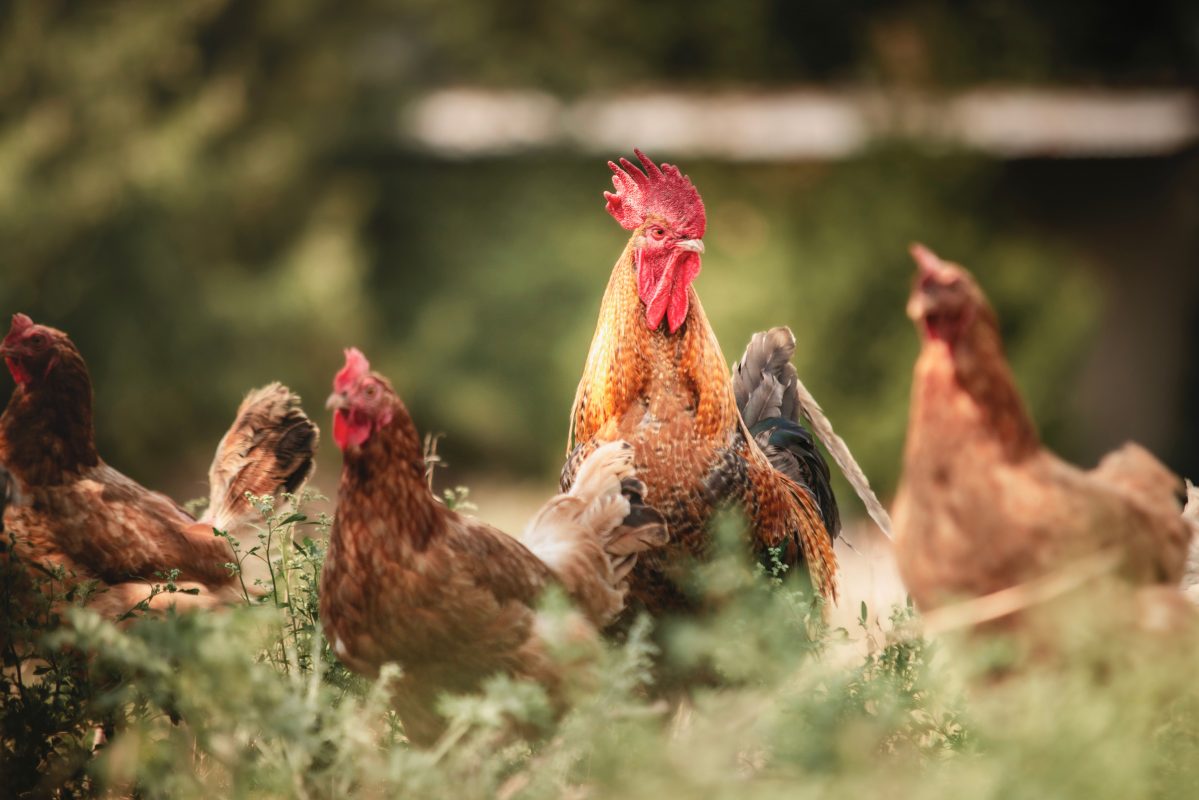
Kenya’s commercial broiler and layer industry runs on a knife-edge cost structure where feed alone eats up to 70% of expenses — and it faces tariff-free competition from Uganda on one side and the threat of full US market access on the other.
Kenya’s poultry sector looks, on paper, like one of the region’s more modern livestock industries — organised integrators, branded day-old chicks, commercial feed mills. In practice, it is one of the most financially fragile: a single input line, feed, determines whether an entire production cycle turns a profit, and the sector’s biggest competitive threats come not from disease or drought but from trade policy on two fronts at once.
01An industry built on hybrids, still dominated by the indigenous bird
Layers and broilers together make up an estimated 23% of Kenya’s total chicken population — layers at roughly 9.6% and broilers at 13.4% — with the remainder overwhelmingly indigenous, free-ranging birds kept across smallholder households. Commercial broiler production is heavily geographically concentrated: some 93% of Kenya’s broilers are raised in and around Nairobi and Central Kenya, close to feed mills, hatcheries and urban demand.
Production systems range from large, fully integrated operations running 3,000 to over 10,000 birds down to medium and small-scale units of 500 to 3,000 birds. A handful of vertically integrated players anchor the formal sector: Kenchic PLC is the leading day-old-chick and processed-chicken supplier in East Africa, while feed millers including Unga Group, Pembe Feeds, MolaPlus Feeds, Bidco Africa, Chandaria Industries and Sigma Feeds supply the commercial ration base that both broiler and layer operations depend on.
02The feed wall
Across every source tracking Kenyan broiler economics, one number recurs with remarkable consistency: feed accounts for roughly 60–75% of total production cost, with 70% cited most frequently as the working figure for commercial broiler operations. This single ratio explains more about the sector’s volatility than any disease outbreak or demand shift — when maize and soybean meal prices move, broiler margins move with them almost one for one, and producers have little room to absorb the swing.
Uganda’s experience shows how this exposure compounds even where raw materials are grown locally. Uganda has ample domestic maize and soybean production, yet industry participants have blamed rising export of these same raw materials for high and volatile domestic feed costs — Uganda’s own feed millers have called for policies to secure raw material supply domestically rather than compete with export markets for the same maize and soya that livestock producers need. The result is that even a landlocked country with real agricultural surplus cannot fully insulate its poultry sector from the same feed-cost volatility affecting import-dependent Kenya.
Uganda’s soybean sector has been identified by the Uganda Investment Authority as one of five key value chains in a USD 1.4 billion agricultural investment plan, alongside coffee, dairy, beef and maize — a direct policy response to surging feed demand from poultry, pig and dairy expansion. Feed millers increasingly source soybean cake directly from Ugandan producers rather than commodity exchanges, favouring local product over imports on cost and tariff grounds, but the underlying tension between exporting raw maize/soya and feeding it to a growing domestic livestock sector remains unresolved.
03The EAC side of the squeeze
Within the East African Community, poultry meat and eggs move into Kenya from Uganda without tariff restrictions, exposing Kenya’s more capital-intensive commercial integrators to competition from Ugandan producers operating under a different cost base. In 2023, Kenya imported approximately 412 metric tons of hatching eggs, worth about US$1.5 million, primarily from Tanzania, Zambia, Turkey and the Netherlands — a reminder that even the genetic starting point of Kenya’s commercial flock depends on imported breeding stock.
Uganda’s own poultry meat production has grown steadily, from roughly 70,500 tons in 2021 to an estimated 76,000 tons by 2026 — modest 1.2% average annual growth, but growth that flows partly across the open EAC border into Kenya’s domestic market under the bloc’s common external tariff arrangements.
04The bigger threat: US market access
The more consequential trade exposure sits outside the EAC. Kenya’s poultry sector has been a central sticking point in the US-Kenya Strategic Trade and Investment Partnership (STIP), launched in July 2022 to negotiate high-standard trade commitments between the two countries. Industry stakeholders have warned that granting the United States full market access for poultry products could cost Kenya’s sector up to Ksh 172 billion (approximately US$1.28 billion) — a figure that dwarfs the scale of the EAC-level Uganda competition and reflects the price gap between heavily subsidised, industrial-scale US poultry production and Kenya’s smaller, higher-cost commercial operations.
| Trade exposure | Mechanism | Scale |
|---|---|---|
| Intra-EAC (Uganda) | Tariff-free poultry meat & egg imports under EAC common market | Ongoing, moderate — competitive pressure on price |
| Hatching egg imports | Genetic stock sourced from Tanzania, Zambia, Turkey, Netherlands | ~412 MT / US$1.5M (2023) |
| US-Kenya STIP | Potential full market access for US poultry under trade negotiation | Up to Ksh 172bn (~US$1.28bn) at risk, per industry estimates |
“Poultry meat and eggs are imported from Uganda without tariff restrictions… industry stakeholders warn that granting U.S. poultry full market access could cost the sector up to Ksh 172 billion.”
05What this means for sourcing and finance
For Fava Herb’s positioning across Kenya, Uganda, Rwanda, Ethiopia and South Sudan, poultry is less a supply-availability story than a margin-volatility story. The physical constraint that shaped the Beef & Cattle issue — too little formal processing capacity relative to herd size — barely applies here; Kenya’s poultry sector already has commercial-scale integrators, hatcheries and feed mills. The binding constraint is cost exposure: any financing or off-take structure in this sector needs to account for feed-price pass-through risk within a single five-to-eight-week production cycle, and for policy risk from two directions — a tariff-free EAC neighbour on one side and a pending bilateral trade negotiation that could reshape the entire competitive landscape on the other.
Practically, this argues for financing structures tied to feed-cost hedging or forward contracting with the major millers (Unga, Pembe, Bidco, Sigma) rather than pure production-volume lending, and for treating STIP developments as a standing risk factor to monitor rather than a one-off event — the scale of exposure (Ksh 172bn) is large enough to reprice the sector’s competitive position within a single negotiating cycle.
The full Poultry data brief
This issue’s standalone PDF goes deeper: feed-cost pass-through modelling across a broiler production cycle, a comparison of Kenyan and Ugandan integrator cost structures, STIP negotiation timeline and scenarios, and financing structures built around feed-cost hedging.
DOWNLOAD THE FULL REPORT →
The Fava Herb Livestock Report — East Africa’s Livestock Trade, Decoded: Poultry
A five-part market intelligence series on East Africa’s livestock economy — beef & cattle, poultry, goat & sheep, camels, and pigs. Each report pairs a free SEO blog post with an in-depth, licensed PDF data brief covering production volumes, cross-border trade corridors, export markets, and financing risk across Kenya, Uganda, Ethiopia, South Sudan and the wider Horn of Africa.

Book: Returning To Nature’s Ancient Pharmacy -An African Approach To Natural Remedies
What You’ll Discover:
- Daily Herbal Remedies backed by Scripture and tradition
- Natural healing foods like raw honey, fermented drinks, and superfruits
- Uses of animal fats like tallow, ghee, and bone broth
- African healing plants like hibiscus, tamarind, and baobab
- Teas and Adaptogens for stress, energy, and hormone balance
- Spiritual insights on God’s design for healing and wellness
- Practical recipes, homemade remedies, and devotional reflection

