
Healthy Life
Abyssinian Oil: What Makes This Oil Unique
Nov
Abyssinian Oil
The seed oil named after the Horn of Africa — and the only carrier oil on earth dominated by long-chain erucic acid. Here is why that matters for hair, skin, and clean beauty formulation.
If you have spent any time reading the ingredient lists of premium hair serums, heat protectants, or lightweight facial oils, you have almost certainly encountered Crambe Abyssinica Seed Oil — even if the name did not register. It is one of the most widely used carrier oils in professional cosmetic formulation, valued not for a long list of nutrients but for a single defining property: an extraordinarily high concentration of erucic acid, a long-chain monounsaturated fatty acid that gives the oil a texture, slip, and performance profile unlike almost any other botanical oil available.
This guide explains what Abyssinian oil is, where it comes from, what makes its fatty acid composition so unusual, and why those properties translate into measurable benefits for hair and skin. It also addresses, directly, the question people find when they search the oil’s name: is erucic acid safe to use?
The Plant and Its East African Origins
Crambe abyssinica is a flowering annual plant in the Brassicaceae family — the same botanical family as broccoli, mustard, and rapeseed. It produces clusters of small white flowers followed by round, single-seeded fruits that, when mature and pressed, yield the oil known commercially as Abyssinian oil.
The species name abyssinica derives from Abyssinia, the historical European designation for the Ethiopian highlands and surrounding Horn of Africa region. The plant is native to this area and has been documented growing across the Ethiopian highlands for centuries. Today, commercial cultivation has expanded beyond East Africa into parts of Europe, particularly the United Kingdom and the Netherlands, where its agronomic tolerance for cooler climates makes it a viable oilseed crop. However, Ethiopia and Kenya remain significant regions of origin and cultivation, and the oil’s East African identity remains central to its commercial and cultural positioning.
The seed typically contains 35–40% oil by weight, a yield that makes it commercially viable as a cold-press crop without requiring solvent extraction. The plant itself is drought-tolerant relative to other oilseeds, which, combined with its short growing cycle of approximately 90–100 days, makes it attractive to smallholder farmers across East African highland regions as a rotation crop between staple grain seasons.
Cold-Pressing: How the Oil Is Made
Cosmetic-grade Abyssinian oil is produced by cold-pressing the dried seeds of Crambe abyssinica — a mechanical extraction process that uses hydraulic pressure to rupture the seed cells and release the oil without the application of external heat or chemical solvents. Cold-pressing preserves the oil’s full complement of naturally occurring minor constituents: the tocopherols, sterols, and trace phytochemicals that accompany the fatty acids and contribute to the oil’s oxidative stability and dermatological activity.
Following pressing, the raw oil is typically filtered through progressively finer membranes to remove seed meal particles and residual water, yielding a clear to pale straw-yellow oil with a very light, slightly nutty odour. Refining stages — bleaching and deodorisation — can be applied to produce a fully odourless, water-white oil suitable for fragrance-sensitive formulations, though virgin cold-pressed Abyssinian oil retains trace aromatic compounds that some formulators prefer for their natural character.
The INCI designation for this ingredient is Crambe Abyssinica Seed Oil. On product labels you may also see it listed as Abyssinian oil, Abyssinian seed oil, crambe oil, or Ethiopian crambe seed oil. All refer to the same oil from the same species. It appears on the EU Cosmetics Ingredient Database (CosIng) as a skin-conditioning emollient and hair-conditioning agent.
The Fatty Acid Fingerprint: What Makes This Oil Unique
The defining characteristic of Abyssinian oil is its fatty acid composition — and specifically the dominance of erucic acid (C22:1), a very long-chain monounsaturated fatty acid that accounts for approximately 55–65% of the total oil weight. This is a proportion that has almost no parallel in commercially available botanical oils. For context: most carrier oils used in cosmetics — argan, rosehip, jojoba, marula, moringa — contain no erucic acid at all. High-oleic versions of sunflower and safflower oil are prized for reaching 80–90% oleic acid, a shorter chain. Abyssinian oil reaches similar numerical dominance but with a fundamentally different fatty acid, one whose longer carbon chain and specific molecular geometry produce a distinctive tactile and performance profile.
The second most abundant fatty acid is gondoic acid (C20:1, also called eicosenoic acid), typically at 15–20%. Together, erucic and gondoic acids represent a combined proportion of long-chain monounsaturates in the range of 75–83% — giving the oil an unusual molecular architecture compared to the shorter-chain polyunsaturate-dominant oils common in natural beauty.
The practical consequence of this long-chain composition is that Abyssinian oil has a notably different molecular weight and viscosity profile from short-to-medium chain oils. Despite this, it absorbs quickly and dries without a greasy residue — the long-chain erucic acid molecules form a smooth, low-drag film rather than a surface slick. This film-forming property is precisely what gives the oil its silicone-like performance in haircare applications.
Erucic Acid: Addressing the Safety Question
A proportion of consumers who search for Abyssinian oil encounter concerns about erucic acid — the dominant fatty acid in the oil. These concerns originate from a well-documented dietary safety issue and are important to address clearly.
The dietary erucic acid concern derives from studies conducted primarily in the 1970s that linked high-erucic-acid rapeseed oil, consumed as a cooking and food oil, to cardiac lipidosis (fat accumulation in heart muscle tissue) in rodent models. In response, regulators in the European Union, the United States, Canada, and other markets set legal maximum limits for erucic acid content in edible oils — the development of low-erucic rapeseed varieties led to the creation of canola oil as a replacement. This regulatory history is real and the dietary concern, particularly for high and prolonged consumption, is scientifically grounded in animal model data.
However, topical cosmetic use of erucic acid-rich oils is a categorically different exposure scenario from dietary ingestion. Dermal absorption of fatty acids from topically applied oils is limited by the skin’s stratum corneum barrier and occurs at levels orders of magnitude below those required to produce systemic cardiac effects. The European Commission’s Scientific Committee on Consumer Safety (SCCS) has specifically evaluated erucic acid in cosmetic applications and concluded that it does not present a safety concern at concentrations used in cosmetic products. Crambe Abyssinica Seed Oil carries a full EU Cosmetics Regulation approval for leave-on and rinse-off cosmetic use without restriction on erucic acid content.
The safety concern with erucic acid is dietary (oral consumption of high-erucic edible oils over sustained periods). Topically applied Abyssinian oil, used on hair and skin, does not present the same exposure pathway or the same regulatory concern. The two applications are not comparable.
Abyssinian Oil for Hair: Benefits and Applications
Abyssinian oil is arguably better established as a haircare ingredient than as a skincare one. Its performance in hair applications is driven directly by the properties discussed above: the long-chain erucic acid creates a thin, even, low-friction film along each hair shaft without the heavy residue that most saturated oils leave on fine or low-porosity hair.
Frizz Control and Smoothing
Frizz occurs primarily when the outer cuticle layer of the hair shaft is raised by humidity, mechanical damage, or chemical processing, allowing moisture from the air to penetrate the cortex unevenly and cause the shaft to swell. Abyssinian oil’s erucic acid film lies flat along the cuticle, reducing the raised surface area available for moisture intrusion. It achieves a degree of cuticle-sealing comparable to lightweight silicone serums, but without the build-up that requires clarifying treatments to remove.
Heat Protection
The film-forming properties of Abyssinian oil also provide a measurable thermal barrier when applied to hair before heat styling. The oil’s high erucic acid content gives it good thermal stability — a resistance to oxidative breakdown at the temperatures reached by blow dryers (typically 80–130°C for most heat settings) that exceeds that of polyunsaturated-dominant oils such as flaxseed or grape seed. Several commercial heat protectant sprays list Crambe Abyssinica Seed Oil as a primary or key supporting ingredient precisely for this thermal stability.
Natural and Type 4 Hair
Abyssinian oil has gained significant traction in the natural hair community — particularly among those managing Type 3C to 4C coil patterns — for its ability to provide slip and definition without weighing down curl formation. Many heavier oils that provide adequate moisture retention also cause curl clumping or flatten volume. Abyssinian oil’s lightweight molecular profile allows it to lubricate the curl strand without altering curl pattern. It is frequently used in the LOC (Liquid-Oil-Cream) or LCO method as the oil step, where slip and penetration matter more than surface coating.
Hygral Fatigue Prevention
Hygral fatigue is the structural weakening of the hair shaft caused by repeated cycles of swelling (water uptake) and shrinking (drying). Oils applied before wash day act as a pre-poo treatment that moderates how quickly and how much water the shaft absorbs, reducing the stress on the cortex proteins. Abyssinian oil’s light film does not block water uptake entirely but slows the rate of saturation, which dermatological research on hair fibre mechanics suggests is where much of the protective benefit lies.
- Pre-poo treatment: Apply to dry hair 20–45 minutes before shampooing to reduce hygral fatigue and ease detangling
- Heat protectant: Work 2–4 drops through damp hair before blow-drying or using a flat iron or curling wand
- Finishing serum: Rub 1–2 drops between palms and smooth over dry styled hair for frizz control and shine
- LOC/LCO method: Use as the Oil step, applied between liquid and cream for natural hair styling
- Sealing oil: Apply to the ends of dry hair to seal in moisture without adding visible residue
Abyssinian Oil for Skin: Properties and Benefits
While Abyssinian oil is more prominent in hair care formulation, it has a growing presence in premium skincare, where its lightweight texture, low comedogenicity, and oxidative stability make it attractive as either a facial oil or a serum base.
Lightweight Moisturisation
The erucic acid molecules in Abyssinian oil form a smooth, non-occlusive emollient film on the skin surface that reduces transepidermal water loss (TEWL) without blocking gas exchange through the stratum corneum. In practical terms, this translates to moisturisation that does not feel heavy or greasy, making it suitable for daytime use on oily and combination skin types that cannot tolerate richer oils like marula or avocado.
Anti-Ageing Properties
Abyssinian oil contains naturally occurring tocopherols (vitamin E isomers) at concentrations that contribute to its oxidative stability and that also function as antioxidants on the skin surface, neutralising free radicals generated by UV exposure and environmental pollution. The erucic acid component itself has shown preliminary activity in supporting collagen matrix integrity in cell culture studies, though no human clinical trials specifically on Abyssinian oil’s anti-ageing effects have yet been published. The oil is commonly formulated alongside retinol, vitamin C derivatives, and peptides in premium facial oils where its lightweight carrier properties enhance delivery of actives without diluting their effect.
Oxidative Stability
Due to its very low polyunsaturated fatty acid content (linoleic acid accounts for only ~9%), Abyssinian oil is exceptionally stable against oxidation compared to linoleic-rich oils such as rosehip or evening primrose. Oils rich in polyunsaturated fatty acids are susceptible to peroxidation when exposed to light, heat, and air, generating free radicals that can accelerate skin ageing rather than prevent it. Abyssinian oil’s stability makes it suitable for use in unpreserved facial oil formulations, warm-climate markets, and products where a long shelf life without antioxidant additives is desirable.
- Apply 2–3 drops to cleansed, damp skin as a lightweight facial oil before moisturiser
- Use as a serum base in DIY formulations with vitamin C, niacinamide, or retinol-equivalents
- Apply to cuticles and nail beds as a lightweight conditioning treatment
- Use as a body oil for areas prone to keratosis pilaris or dry patches where heavier oils feel uncomfortable
- Incorporate in massage oil blends with essential oils at a 1–2% dilution for the active ingredient
Abyssinian Oil vs. Silicone: A Direct Comparison
The most commercially significant positioning of Abyssinian oil is as a natural alternative to silicone in hair and skin products. This comparison is made explicitly in trade literature, raw ingredient data sheets, and professional formulation guides. The following table maps how the two materials compare across the key performance criteria that determine their use in formulation.
| Property | Abyssinian Oil | Dimethicone (Silicone) |
|---|---|---|
| Origin | Natural botanical seed oil | Synthetic polymer |
| Hair slip and detangling | Excellent | Excellent |
| Frizz control | High | High |
| Heat protection | Good (thermal film barrier) | Very good |
| Shine | Natural, non-plastic | High gloss, reflective |
| Build-up on hair shaft | Minimal — rinses with mild shampoo | Significant — requires sulphate shampoo to remove |
| Biodegradable | Yes — fully biodegradable | No — persistent environmental concern |
| Skin absorption | Penetrates and conditions | Sits on surface only |
| Comedogenicity | 0–1 (non-comedogenic) | 0–1 (non-comedogenic) |
| Regulatory trend | Approved, growing preference in clean beauty | Cyclic silicones D4, D5, D6 restricted in EU wash-off products; under review in leave-on |
| Shelf stability | High — low polyunsaturate content | Very high |
| Clean beauty alignment | Yes | Excluded by most clean beauty standards |
The primary limitation of Abyssinian oil relative to silicone is that it does not match the highest-gloss, plastic-smooth surface reflection that high-viscosity silicones such as cyclopentasiloxane or amodimethicone produce. For consumers accustomed to extremely high-shine silicone finishes, Abyssinian oil’s shine is more natural and less reflective. Whether this is a limitation or a feature depends entirely on preference and context.
Full Composition and Phytochemical Profile
The following table provides the complete composition of cold-pressed Crambe abyssinica seed oil, including minor constituents that contribute to its stability and dermatological activity.
| Constituent | Type | Typical % | Function / Significance |
|---|---|---|---|
| Erucic acid (C22:1) | Long-chain MUFA | 55–65% | Defining compound; responsible for film-forming, slip, and thermal stability. Gives the oil its silicone-like performance. |
| Gondoic acid / Eicosenoic acid (C20:1) | Long-chain MUFA | 15–20% | Second dominant fatty acid; contributes to emolliency and molecular structure of the oil’s film. |
| Linoleic acid (C18:2) | PUFA (Omega-6) | 7–11% | Essential fatty acid; supports epidermal barrier function and ceramide synthesis. Present in small but physiologically relevant proportion. |
| Oleic acid (C18:1) | MUFA (Omega-9) | 6–10% | Skin-softening emollient; supports penetration of other active ingredients. |
| Palmitic acid (C16:0) | Saturated fatty acid | 1.5–3% | Minor contribution to stability and barrier function; naturally found in skin lipids. |
| Stearic acid (C18:0) | Saturated fatty acid | <2% | Minor emulsifying and stabilising role. |
| Alpha-tocopherol (Vitamin E) | Tocopherol antioxidant | Trace | Antioxidant; contributes to oxidative shelf stability of the oil; free radical scavenging on skin surface. |
| Beta-sitosterol | Phytosterol | Trace | Anti-inflammatory; supports skin barrier repair; demonstrated activity against erythema in dermatological models. |
| Campesterol / Stigmasterol | Phytosterols | Trace | Minor anti-inflammatory and barrier-supporting activity; contributes to the natural feel of unrefined oil. |
| Glucosinolate breakdown products | Brassicaceae secondary metabolites | Trace (refined) to low (virgin) | Present in virgin cold-pressed oil; removed by refining. May contribute to the mild odour of unrefined oil. |
Shop Abyssinian Oil at Fava Herb
Cold-pressed Crambe abyssinica seed oil, sourced and quality-checked for cosmetic and professional formulation use. Available in retail and bulk quantities.
Shop Abyssinian OilHow to Use Abyssinian Oil
For Hair
- Pre-shampoo treatment: Apply undiluted to dry hair, concentrating on the lengths and ends. Leave for 20–45 minutes before washing with a mild sulphate-free shampoo. This reduces hygral fatigue and makes detangling after washing significantly easier.
- Heat protectant mist: Mix 5 drops into a small spray bottle with water and a water-soluble emulsifier or aloe vera gel. Mist onto damp hair before heat styling. The thin film provides thermal protection without weighing the hair down.
- Finishing serum (dry hair): Rub 1–2 drops between both palms until fully spread, then smooth over the surface of dry, styled hair to reduce flyaways and add shine. Start with 1 drop for fine hair.
- Scalp oil: While primarily used on the shaft, Abyssinian oil can be applied lightly to a dry or itchy scalp as a calming emollient, massaged in with fingertips, and left overnight before washing.
- DIY conditioner boost: Stir 1 teaspoon into a portion of conditioner or deep conditioning mask to increase its slip and lubrication without significantly changing the product’s weight or rinse behaviour.
For Skin
- Facial oil: Apply 2–3 drops to cleansed, slightly damp skin as the final step of a morning or evening routine, or before a moisturiser. Pat gently; do not rub vigorously, which can pill the oil on the skin surface.
- Serum carrier: Use as the base for a DIY vitamin C serum (oil-soluble vitamin C forms such as ascorbyl tetraisopalmitate) or retinol-equivalent blend, at the appropriate active dilution.
- Body application: Apply post-shower to slightly damp skin over areas prone to roughness or keratosis pilaris. Its fast absorption makes it practical for daily body use where heavier body butters are inconvenient.
- Nail and cuticle conditioning: Apply a small drop to each cuticle and massage in; the lightweight film absorbs without leaving a greasy residue on surrounding skin.
For Formulators
- Use at 1–10% in hair serum and thermal protectant formulations as a primary or co-emollient active
- Incorporate at 2–15% in anhydrous facial oils and dry skin oil blends as a lightweight skin-feel modifier
- Add to emulsion formulations at 3–8% in the oil phase as a natural silicone replacement with comparable slip and texture improvement
- Compatible with most carrier oils, esters, waxes, and emulsifiers; no known compatibility issues at standard formulation concentrations
Safety and Contraindications
Abyssinian oil has an excellent dermatological safety record in cosmetic use. It is approved under EU Cosmetics Regulation without restriction for both leave-on and rinse-off applications. The following notes are relevant for specific users and applications.
Safety Notes
- Topical erucic acid: As detailed above, the dietary safety concern about erucic acid does not apply to topical cosmetic use. The EU SCCS and equivalent regulatory bodies have separately evaluated topical erucic acid and found it safe at cosmetic use concentrations. Do not confuse dietary erucic acid guidance with topical cosmetic safety data.
- Brassicaceae allergy: In rare cases, individuals with documented cross-reactive allergies to brassicaceae species (mustard, cabbage family) may experience sensitivity to cold-pressed crambe oil that retains seed proteins. Highly refined crambe oil typically removes protein residues. If you have a known mustard or brassicaceae allergy, patch-test the specific product grade before use.
- Patch testing: As with all topical botanical oils, perform a patch test on the inner forearm 24 hours before first full application, particularly for use on facial or sensitive skin.
- Pregnancy: Abyssinian oil is considered safe for topical use during pregnancy at cosmetic concentrations. There are no known contraindications for topical application. However, as with all botanical preparations, consult a healthcare provider if you have specific concerns.
- Storage: Despite its good oxidative stability, store Abyssinian oil in a cool, dark location away from direct sunlight and heat sources. Once opened, use within 12–18 months. The addition of vitamin E (tocopherol) as an antioxidant extends shelf life in DIY formulations.
- Do not ingest: Cosmetic-grade Abyssinian oil is not cleared for food use and should not be consumed. Dietary use of high-erucic-acid oils carries the regulatory concerns described above and is not recommended.
Frequently Asked Questions
The Oil That Performs Like a Synthetic
Cold-pressed from the seeds of a plant named for the Ethiopian highlands. One of the most versatile and technically distinctive botanical oils in professional formulation.
Shop Abyssinian OilBrowse the Full Carrier Oil Range
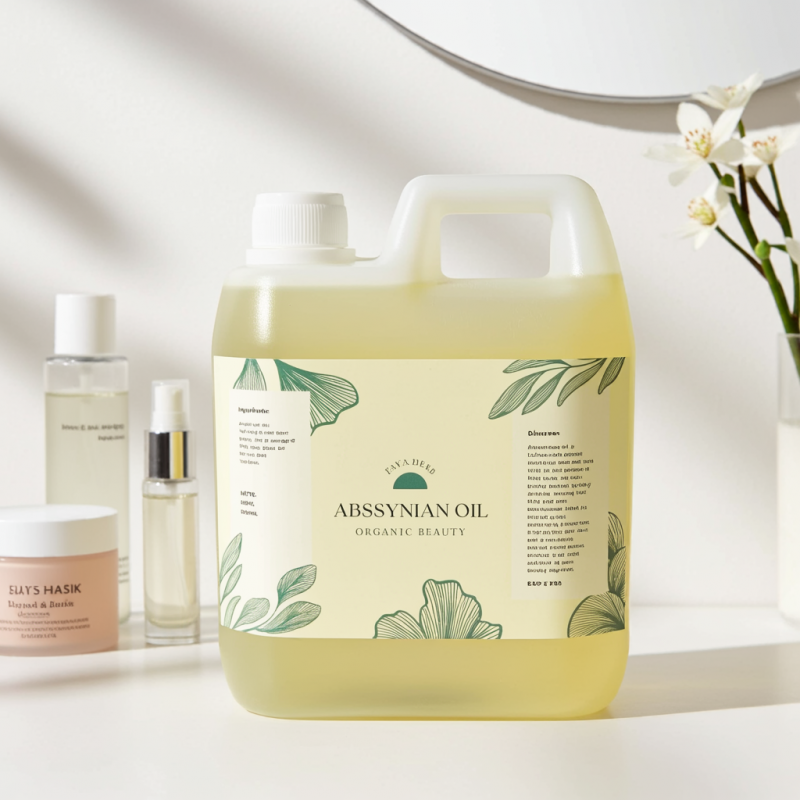
Abyssinian Oil 1L
- Abyssinian oil’s versatility extends beyond individual applications. It can be seamlessly incorporated into various beauty and skincare products, such as serums, moisturizers, hair conditioners, and more.
- Whether applied to the skin or hair, Abyssinian oil imparts a natural and healthy glow.
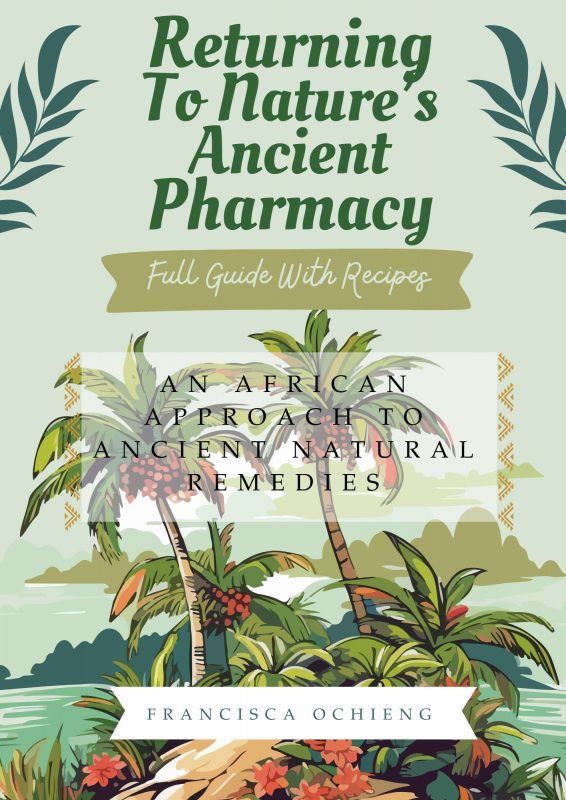
Book: Returning To Nature’s Ancient Pharmacy -An African Approach To Natural Remedies
What You’ll Discover:
- Daily Herbal Remedies backed by Scripture and tradition
- Natural healing foods like raw honey, fermented drinks, and superfruits
- Uses of animal fats like tallow, ghee, and bone broth
- African healing plants like hibiscus, tamarind, and baobab
- Teas and Adaptogens for stress, energy, and hormone balance
- Spiritual insights on God’s design for healing and wellness
- Practical recipes, homemade remedies, and devotional reflection

