
Healthy Life
Qasil Powder: The Traditional Somali Qasil Beauty Ritual
Aug
Qasil Powder
A traditional Somali beauty powder made from the dried leaves of the Gob tree — one of the oldest documented skin and hair care preparations in East African tradition, now reaching the global clean beauty market.
Walk into any Somali household with a grandmother in it, and there is a reasonable chance you will find qasil. Not in a branded jar with a clinical insert — likely in a bag or a small tin, a green-brown powder mixed as needed with water, passed down not as a commercial product but as knowledge. For generations across Somalia and the Somali communities of Kenya’s northeastern counties, qasil has been the default skin cleanser, the face mask before a wedding, the scalp treatment after a long journey, the first thing applied to a new bride’s skin. It is, in the truest sense, a heritage beauty ingredient.
What is now happening to qasil is what has happened to a series of traditional botanical preparations before it: the global clean beauty movement has found it. Consumers in Europe, North America, and the Gulf who are looking for alternatives to synthetic surfactants, chemical exfoliants, and petroleum-derived ingredients are discovering that Somali women have been using a plant-based cleanser with a scientifically coherent mechanism for centuries. This guide provides the full picture — the plant, the cultural context, the chemistry, the evidence, and the practical how-to — without either romanticising the tradition or reducing it to marketing copy.
Somalia and Kenya: Where Qasil Comes From
Ziziphus spina-christi — known in Somali as the Gob tree — grows prolifically across the Horn of Africa and the wider East African region. It is one of the most drought-tolerant tree species documented in arid and semi-arid land agro-ecology, capable of surviving on minimal rainfall and thriving in the sandy, low-nutrient soils that characterise much of Somalia’s landscape. Its range spans the entire territory of Somalia — from the coastal lowlands of the south to the higher elevations of Puntland and Somaliland in the north — making it a genuinely abundant and accessible resource for Somali communities across the country.
In Kenya, the Gob tree is found primarily across the northeastern counties that share ecological and cultural continuity with Somalia: Garissa, Wajir, and Mandera, where Somali communities have long cultivated the same traditions around qasil use. The tree also grows in parts of Kenya’s eastern counties (Tana River, Kitui margins) and along the coast, where the dry woodland vegetation supports its habitat requirements. The Kenyan growing range is less extensive than Somalia’s, but the combination of Kenyan-Somali community knowledge and abundant local sourcing makes Kenya a relevant producer for the regional market.
What distinguishes qasil sourcing from many other botanical products is the role of women in its supply chain. In Somalia, the harvesting, drying, grinding, and selling of qasil has historically been women’s work — a cottage-scale economic activity that provides income within a cultural context that validates the product’s use from producer to consumer. As global demand grows, there is an emerging opportunity for this supply chain to formalise without losing the community-rooted character that defines authentic qasil. Fava Herb sources from verified East African suppliers with direct relationships to producing communities.
The Gob Tree: Ziziphus spina-christi
Ziziphus spina-christi is a medium-to-large thorny tree in the family Rhamnaceae, typically reaching 5–10 metres in height under favourable conditions, though it commonly grows as a multi-stemmed shrub in more arid sites. It is recognisable by its distinctive paired spines at each node — one straight and one recurved — its small, oval, dark green leaves with three prominent veins, and the small round fruits (similar in appearance to small dates or jujubes) that ripen from green through yellow to reddish-brown.
The tree is exceptionally tolerant of heat, drought, and poor soils. It fixes atmospheric nitrogen through root associations, gradually improving the soil beneath it — a property that makes it valuable in agroforestry and land rehabilitation programs across the Horn of Africa. Individual specimens can live for several hundred years, developing massive, gnarled trunks that become local landmarks in the communities where they grow.
Ziziphus spina-christi has multiple traditional uses across its range beyond qasil production. The fruit is edible and nutritious, consumed fresh or dried. The wood is dense and termite-resistant, used for construction. The tree has been used in traditional medicine across East Africa and the Middle East for a wide range of applications, with documented ethnopharmacological records spanning wound healing, fever management, skin conditions, and digestive complaints. The leaves specifically — the source of qasil — have been separately studied for their antimicrobial, antioxidant, anti-inflammatory, and wound-healing properties in peer-reviewed phytopharmacological research.
Ziziphus spina-christi is also known as the Sidr tree across East African and Middle Eastern contexts, a name reflected in its centuries of documented use and trade. The tree’s historical significance to regional cultures is well-documented in literary and historical records. Qasil powder, however, is specifically a Somali product — the combination of the Gob tree’s particular leaf chemistry and the traditional Somali processing method produces a preparation that is culturally and commercially distinct from other regional uses of the same species.
From Leaf to Powder: The Traditional Process
The preparation of qasil is a deceptively simple process whose quality depends almost entirely on how the drying stage is handled. High-temperature or direct-sun drying degrades the heat-sensitive flavonoids and vitamin C content of the leaves, reducing the finished powder’s potency. Low-temperature shade-drying, the traditional Somali method, preserves the full complement of active compounds. The following strip shows the complete journey from living leaf to finished cosmetic product.
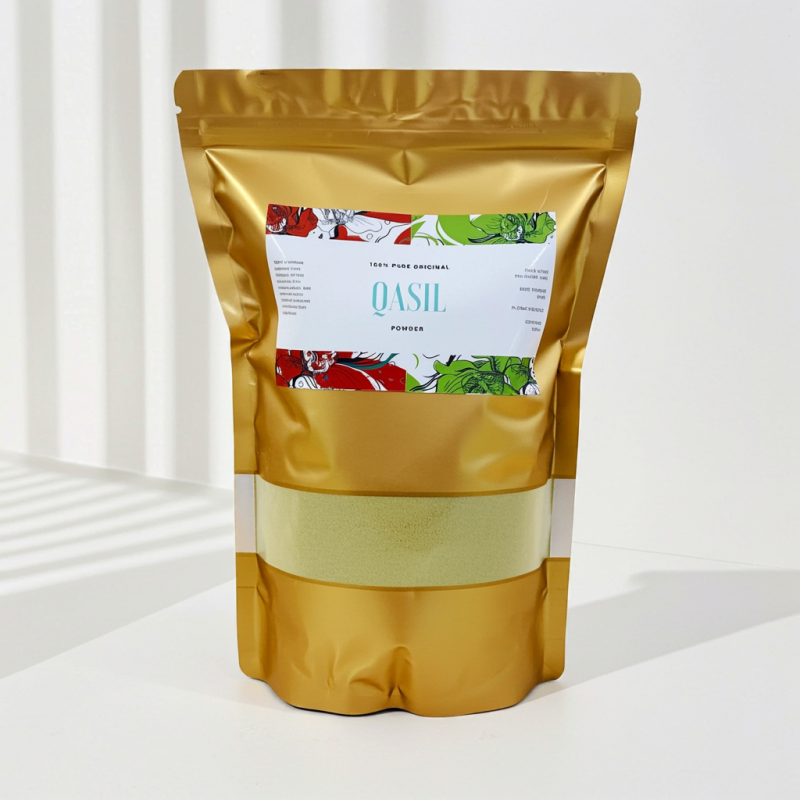
A critical quality marker for commercially produced qasil is colour: genuine, well-prepared qasil powder should be a medium olive-green to sage-green, reflecting the preserved chlorophyll content of properly dried leaves. Powder that appears very dark brown or blackish has typically been exposed to excessive heat during drying, degrading the chlorophyll and the heat-sensitive phytochemicals alongside it. Very pale, yellowish powder may indicate leaves that were harvested immature or processed from old stock. The characteristic medium-green colour of quality qasil is a reliable visual proxy for phytochemical integrity.
How Saponins Work: The Science of Natural Cleansing
Qasil’s primary functional claim — that it cleanses skin and hair effectively without synthetic detergents — rests on one class of compounds: saponins. Saponins are a family of naturally occurring plant glycosides characterised by their amphiphilic molecular structure: each saponin molecule has a fat-soluble (hydrophobic) end and a water-soluble (hydrophilic) end. This dual-nature structure is the molecular basis of all surfactant action, and it is what allows saponins to do what synthetic surfactants do, but with a gentler interaction profile at the concentrations found in qasil.
Ziziphus spina-christi leaves contain triterpenoid saponins — primarily glycosides of ursolic acid and oleanolic acid — at a dry weight concentration estimated at 8–15%. This is high enough to produce a measurable lather and meaningful cleansing effect when the powder is mixed with water and agitated. The mechanism proceeds as follows:
Step 1: Orientation
When qasil paste meets skin, saponin molecules orient themselves at the oil-water interface — their hydrophobic tails embed in surface sebum and lipid-bound impurities; their hydrophilic heads face outward into the water phase.
Step 2: Emulsification
Gentle massage agitates the interface, causing saponin molecules to form micelles — spherical structures where impurities are trapped in the hydrophobic core. The micelles become suspended in the water phase, lifting them away from the skin surface.
Step 3: Rinse
Rinsing with water removes the micelles, carrying the trapped sebum, bacteria, and environmental debris away from the skin without disrupting the skin’s natural fatty acid and ceramide composition at the depth of the barrier.
The critical difference between saponin-based cleansing and synthetic surfactant (SLS, SLES, sodium cocoyl sulphate) cleansing is the depth and selectivity of action. Synthetic surfactants at the concentrations used in commercial cleansers can penetrate the stratum corneum and remove intracellular lipids, temporarily compromising the skin barrier and elevating TEWL. Saponins at the concentrations naturally occurring in qasil act primarily at the skin surface, lifting the outer layer of excess sebum and debris without the same depth of penetration. This is why qasil is well-tolerated by sensitive skin types that react to conventional cleansers.
Active Compounds in Qasil Powder
The saponin content explains qasil’s cleansing action, but the secondary phytochemical profile of Ziziphus spina-christi leaves is what gives the powder its broader skin benefits. The following compound classes have been identified and documented in peer-reviewed phytopharmacological research on the species.
Triterpenoid Saponins (Ursolic Acid and Oleanolic Acid Glycosides)
The dominant saponins in Z. spina-christi leaves are glycosides of ursolic acid and oleanolic acid — two pentacyclic triterpene acids with well-documented biological activity beyond their surfactant properties. Both compounds demonstrate antimicrobial activity against skin-relevant pathogens including Staphylococcus aureus, Pseudomonas aeruginosa, and Candida albicans in in vitro studies. Ursolic acid specifically has documented anti-inflammatory activity via NF-kB pathway inhibition and COX-2 enzyme suppression, a mechanism relevant to both acne inflammation and chronic inflammatory skin conditions. Oleanolic acid has been studied for tyrosinase inhibition — reducing melanin synthesis — providing a plausible scientific mechanism for qasil’s traditional use in addressing hyperpigmentation.
Cyclopeptide Alkaloids
Ziziphus species are uniquely characterised by a class of compounds not found in any other plant genus: cyclopeptide alkaloids, including nummularine, mauritine, and amphibine variants specific to Z. spina-christi. These are complex cyclic peptide structures that have demonstrated antimicrobial activity against a range of bacterial and fungal pathogens, anti-proliferative activity in cancer cell models in vitro, and immunomodulatory properties. Their presence makes Z. spina-christi leaf extract pharmacologically distinctive even within the Ziziphus genus.
Flavonoids: Rutin, Quercetin, Vitexin, and Orientin
The flavonoid fraction of qasil leaf powder includes rutin (quercetin-3-rutinoside), free quercetin, vitexin (apigenin-8-C-glucoside), and orientin (luteolin-8-C-glucoside). These flavonoids provide overlapping but distinct biological activities: rutin and quercetin are potent antioxidants and documented inhibitors of inflammatory pathways; vitexin and orientin contribute additional antioxidant and anxiolytic activity. Quercetin’s tyrosinase-inhibiting activity complements oleanolic acid’s melanin-regulation mechanism, reinforcing qasil’s brightening properties through a second independent pathway.
Condensed and Hydrolysable Tannins
Tannins in qasil powder produce the mild astringency that users notice during application — a tightening sensation on the skin surface that reflects the tannins’ ability to precipitate surface proteins and temporarily contract soft tissue. This astringency translates into visible pore-tightening and oil-controlling effects that last several hours after application. Tannins also contribute antimicrobial activity and wound-sealing properties relevant to post-acne skin repair.
Ascorbic Acid (Vitamin C) and Chlorophyll
Properly dried qasil retains meaningful concentrations of vitamin C and chlorophyll from the fresh leaves. Vitamin C in topical application functions as a cofactor in collagen biosynthesis and a direct antioxidant against UV-generated reactive oxygen species. Chlorophyll — responsible for qasil’s characteristic green colour — has documented wound-healing and deodorising properties and functions as an antioxidant at the skin surface. The loss of these heat-sensitive compounds in poorly processed qasil is why the green-brown colour of the powder is a reliable quality indicator.
Mucilage
Ziziphus leaves contain mucilaginous polysaccharides that dissolve in water to form a mildly viscous, soothing gel. This mucilage fraction provides the conditioning, slip, and calming sensation that distinguishes qasil from harsher natural exfoliants. It is particularly relevant for sensitive and reactive skin, where the mucilage cushions the interaction between the powder particles and the skin surface during application.
Skin Benefits: Evidence and Mechanisms
Deep Cleansing Without Barrier Disruption
The saponin-based cleansing action of qasil removes sebum, environmental pollutants, and surface bacteria effectively without the barrier-disrupting potential of synthetic surfactants. Skin feels clean after use but not stripped — a tactile difference that users familiar with conventional foaming cleansers often notice immediately. For people with reactive or sensitive skin who experience redness or tightness after standard cleansers, qasil frequently represents a usable alternative.
Acne and Breakout-Prone Skin
Qasil addresses acne through three simultaneous mechanisms: the saponins remove surface sebum and reduce the substrate on which acne-causing bacteria proliferate; the tannins tighten pores and reduce the rate of sebum re-accumulation; and the flavonoids and ursolic acid suppress inflammatory cytokine signalling in the skin, reducing the inflammatory response that converts comedones into inflamed papules and pustules. Research on Ziziphus spina-christi leaf extract specifically has documented antimicrobial activity against Staphylococcus aureus — a bacterium identified as a key driver of inflammatory acne severity in dermatological research — with minimum inhibitory concentrations (MIC values) in the range of 0.5–2 mg/mL in in vitro models.
Hyperpigmentation and Skin Brightening
This is the application for which qasil is most celebrated in the Somali beauty tradition, and it is the one with the strongest multi-mechanism scientific rationale. Oleanolic acid and quercetin both independently inhibit tyrosinase, the copper-dependent enzyme that catalyses the rate-limiting step in melanin synthesis. The mild mechanical exfoliation provided by the powder particles promotes accelerated cell turnover, reducing the residence time of hyperpigmented cells in the epidermis. Together, these mechanisms provide both upstream inhibition of new melanin formation and downstream acceleration of hyperpigmented cell removal. The clinical timeframe for visible brightening in traditional use is typically four to eight weeks of consistent twice-weekly application.
Anti-Ageing Support
The flavonoid and vitamin C content of qasil contribute to its anti-ageing properties through established antioxidant pathways. Quercetin, rutin, and vitexin neutralise reactive oxygen species generated by UV exposure and pollution, reducing the oxidative damage to collagen-producing fibroblasts in the dermis. Vitamin C directly supports collagen biosynthesis as a cofactor for prolyl hydroxylase, the enzyme responsible for collagen cross-linking and structural integrity. The combined effect of regular qasil use over time — cleansing, exfoliating, and delivering antioxidants simultaneously — supports a gradual improvement in skin texture and tone that users in the Somali beauty tradition associate with its continued use across decades.
Wound Healing and Post-Acne Recovery
Peer-reviewed studies on Ziziphus spina-christi extracts have specifically investigated wound healing, with several in vitro and animal model studies documenting accelerated epithelialisation and tissue remodelling. The tannin content contributes by tightening and protecting the wound surface; the flavonoids support local anti-inflammatory resolution; and the mucilage provides a soothing, moisturising interface. For post-acne skin recovering from inflamed lesions, these combined properties make qasil a logical post-active treatment.
Hair Benefits: Scalp Health and Natural Cleansing
Natural Shampoo Alternative
Qasil’s saponin content creates a gentle but functional lather when mixed with water and worked through wet hair, providing a cleansing effect that removes sebum and product build-up without the aggressive stripping associated with sulphate shampoos. For natural hair types — particularly Type 3 and Type 4 coil patterns that require moisture retention — sulphate-free cleansing is not a preference but a practical necessity: conventional surfactants at shampoo concentrations can elevate hair shaft hygral stress and disrupt the cuticle more severely on tightly coiled hair that has less natural sebum distribution along the shaft. Qasil offers a functional cleanse without this risk.
Scalp Health and Dandruff Management
Dandruff (Pityriasis capitis) is primarily associated with dysregulation of the scalp’s Malassezia yeast population and the inflammatory response it triggers. Qasil’s antimicrobial compounds — cyclopeptide alkaloids, ursolic acid derivatives, and tannins — have documented activity against Candida albicans and related fungi in in vitro research, providing a plausible mechanism for its traditional use as an anti-dandruff scalp treatment. The anti-inflammatory flavonoid content simultaneously addresses the inflammatory component of the dandruff cycle, making qasil a multi-action scalp treatment rather than purely an antifungal preparation.
Scalp Sebum Regulation
The tannin-driven astringency of qasil extends to the scalp, where it helps regulate excess sebum production by temporarily tightening the follicular openings through which sebum is secreted. This sebum-regulating effect is relevant for oily scalp conditions where excessive sebum accumulation contributes to both odour and the substrate for fungal overgrowth. Regular once-weekly qasil scalp treatment can, over time, reduce the rate of sebum reaccumulation between washes, extending the interval between cleansing sessions.
- Scalp wash: Mix 2 tablespoons of qasil with enough warm water to form a thin paste. Part hair in sections and apply directly to the scalp, massaging gently with fingertip pressure for 3–5 minutes. Extend to the hair lengths if desired. Leave 5 minutes, then rinse thoroughly. Follow with conditioner on the lengths.
- Pre-poo scalp treatment: Apply a thicker qasil paste to the scalp on dry hair before shampooing. Leave 15–20 minutes, then shampoo and condition as usual. Effective for managing scalp conditions including dandruff and seborrheic dermatitis.
- Co-wash substitute: For very frequent cleansers, qasil can replace a co-wash step between shampoo sessions, providing a light cleanse without disturbing the moisture balance of the hair lengths.
The Traditional Somali Qasil Beauty Ritual
Within Somali beauty culture, qasil is not typically used as an isolated step in a multi-product routine — it is often the entirety of the routine. The traditional application, passed down across generations in Somali households, is both simpler and more contextually layered than modern clean beauty adaptations of it.
In its traditional form, qasil is prepared by mixing the powder with plain water to a yogurt-like consistency and applied to the face, neck, and hands with the fingers in small, circular motions. The massage is deliberate and extended — typically five to ten minutes — during which the saponins are activated by friction and water, lifting sebum and surface debris. The paste is left on the skin as a mask for fifteen to thirty minutes, during which it dries slightly and the tannins and flavonoids are in direct contact with the skin surface. It is rinsed off with warm water, and traditionally nothing is applied afterward — the mucilage fraction leaves a mildly conditioning residue that provides sufficient short-term hydration.
For special occasions — weddings, celebrations, post-partum recovery — qasil was applied more generously and left longer, sometimes used daily for a week before an event to maximise the brightening and smoothing effect. This intensified ritual use reflects an understanding, even without the vocabulary of phytochemistry, that the active compounds in qasil accumulate in effect with repeated application.
The global spread of qasil has been driven substantially by the Somali diaspora in Europe (particularly the UK, Sweden, and the Netherlands), North America (Minnesota, Toronto), and the Gulf. As Somali women shared beauty practices in new contexts, qasil moved from being an East African cultural product to a globally searched beauty ingredient. Social media — particularly YouTube tutorials and Instagram content created by Somali beauty influencers — accelerated this trajectory from approximately 2016 onward. This cultural origin story is both authentic and commercially significant: qasil has genuine community advocates who have used it their entire lives, which no lab-synthesised alternative can replicate.
How to Use Qasil Powder: Practical Recipes
- 1–2 tsp qasil powder
- Enough warm water or rosewater to form a paste
- Optional: 2–3 drops raw honey (for dry skin)
- Mix powder with liquid to a smooth yogurt consistency
- Apply to clean, damp skin in circular motions
- Leave 10–20 minutes until slightly set
- Rinse thoroughly with warm water
- Follow with light moisturiser if skin feels tight
- 2 tsp qasil powder
- 1 tsp rosewater
- 1 tsp fresh lemon juice (oily skin) or yogurt (dry skin)
- 1/2 tsp raw honey
- Combine all ingredients to a smooth paste
- Apply to clean skin, avoiding the eye area
- Leave 15–20 minutes
- Rinse with warm water and follow with SPF in the morning
- Note: lemon juice increases photosensitivity — use in evening only
- 2–3 tbsp qasil powder
- Warm water to thin consistency
- Optional: 5 drops rosemary essential oil (scalp stimulation)
- Mix to a pourable, slightly thick liquid
- Pour over wet scalp and work through with fingertips
- Massage for 3–5 minutes to activate lather
- Rinse thoroughly — residual powder can cause dryness
- Follow with conditioner on the lengths; do not apply conditioner to scalp
Mixing Tips and Frequency Guidelines
- Water temperature: Use warm (not hot) water when mixing. Hot water can deactivate some enzymes and degrade vitamin C in the powder before it reaches your skin.
- Rosewater substitute: Rosewater is a traditional complement to qasil and works synergistically — its phenylethyl alcohol and geraniol content add mild antimicrobial and anti-inflammatory properties to the mask blend.
- Frequency for sensitive skin: Start with once per week and observe for any reaction. Most sensitive skin types tolerate qasil well, but the tannin content can be mildly drying with daily use.
- Frequency for oily/acne-prone skin: Two to three times per week is well-tolerated for most oily skin types and is the frequency at which sebum-regulating and anti-acne effects are most consistent.
- Storage: Store dry qasil powder in a sealed container away from moisture. Mixed paste should be prepared fresh each use; do not store mixed paste, as it can grow microbes rapidly without preservatives.
Shop Authentic Qasil Powder at Fava Herb
Sourced from verified East African producers in Somalia and Kenya. Shade-dried to preserve the full complement of saponins, flavonoids, and vitamin C. Genuine olive-green powder — the colour that quality demands.
Shop Qasil PowderBrowse the Full Fava Herb Collection
Full Phytochemical Profile
The following table covers the primary bioactive constituents of Ziziphus spina-christi leaf powder (qasil), their estimated concentration ranges, documented mechanisms, and application relevance.
| Compound / Class | Est. Dry Weight % | Mechanism / Action | Skin / Hair Relevance |
|---|---|---|---|
| Triterpenoid saponins (Ursolic & oleanolic acid glycosides) |
8–15% | Amphiphilic surfactant; micelle formation; antimicrobial; NF-kB inhibition (anti-inflammatory); tyrosinase inhibition | Primary cleanser; acne reduction; hyperpigmentation; anti-inflammatory skin treatment |
| Condensed tannins (Proanthocyanidins) |
4–10% | Protein precipitation (astringency); antimicrobial; antioxidant; vasoconstriction; wound sealing | Pore-tightening; sebum control; post-acne repair; scalp astringency |
| Rutin (Quercetin-3-rutinoside) |
Moderate | Potent antioxidant; anti-inflammatory; capillary-strengthening; UV protection at skin surface | Anti-ageing; rosacea support; general antioxidant skin protection |
| Quercetin | Present | Antioxidant; tyrosinase inhibitor; COX-2 and LOX inhibitor; mast cell stabiliser | Brightening; acne anti-inflammatory; anti-allergy; antioxidant |
| Vitexin & Orientin (C-glycosyl flavones) |
Present | Antioxidant; anti-inflammatory; anxiolytic in systemic models | Supporting anti-inflammatory action; antioxidant skin protection |
| Cyclopeptide alkaloids (Nummularine, Mauritine series) |
Trace–low | Genus-specific antimicrobial; anti-proliferative in vitro; immunomodulatory | Antimicrobial skin and scalp activity; genus-defining phytochemical marker |
| Ursolic acid (free) | Low–moderate | Anti-inflammatory (NF-kB); antimicrobial; wound healing; collagen synthesis support | Acne management; wound repair; anti-ageing |
| Oleanolic acid (free) | Low | Tyrosinase inhibitor; anti-inflammatory; hepatoprotective; antimicrobial | Brightening / hyperpigmentation; anti-inflammatory |
| Mucilaginous polysaccharides | Variable | Hydrogel formation; skin-soothing; moisture retention; reduces mechanical friction | Soothing sensitive skin; conditioning post-cleanse feel; scalp calming |
| Ascorbic acid (Vitamin C) | Variable by drying method | Collagen synthesis cofactor; antioxidant; tyrosinase inhibition; iron absorption enhancer | Anti-ageing; brightening; antioxidant skin protection |
| Chlorophyll | Reflects green colour | Antioxidant; wound healing; deodorising; promotes epithelialisation | Skin healing; quality marker for powder integrity; deodorising scalp treatment |
| Beta-sitosterol & Phytosterols | Trace | COX inhibition; anti-inflammatory; skin barrier support; cholesterol competition | Supporting anti-inflammatory and barrier repair activity |
Safety and Contraindications
Qasil powder has an excellent safety record across its long history of traditional use. The following notes are relevant for specific skin conditions, usage patterns, and individual sensitivities.
Safety Notes and Precautions
- Patch test first: As with any botanical preparation, perform a patch test on the inner forearm 24 hours before first full facial application. Apply a small amount of the mixed paste, leave 15 minutes, rinse, and observe for 24 hours. Redness, itching, or swelling indicates sensitivity to the plant material and full-face use should be avoided.
- Very dry or dehydrated skin: The tannin content of qasil can be drying with overuse. Those with very dry or dehydrated skin should limit application to once per week and always follow with a moisturiser while skin is still damp. Adding a few drops of honey to the qasil paste moderates the drying effect.
- Open wounds, active eczema, or broken skin: Avoid applying qasil to broken skin, open acne lesions that are actively weeping, or areas of active eczema flare. The tannin fraction and the powder’s slight abrasivity may irritate compromised skin barriers. Allow skin to heal before resuming use.
- Eye area: Do not apply qasil paste close to the eye area. If contact occurs, rinse immediately with cool water.
- Pregnancy: Topical use of qasil powder at the concentrations employed in standard facial masks is considered low-risk. There are no documented concerns with topical application during pregnancy. Avoid internal use of large quantities of Ziziphus spina-christi extracts during pregnancy, though this is not a relevant concern for the cosmetic powder application described in this guide.
- Rinse thoroughly for hair: When using qasil as a scalp wash, thorough rinsing is important. Powder residue left in the hair can contribute to scalp dryness and temporary texture change in the hair shaft as it dries. Follow with conditioner on the lengths to restore slip.
- Photosensitivity: Qasil powder alone does not significantly increase photosensitivity. However, if used in combination with lemon juice (as in the brightening mask recipe), photosensitivity is elevated. Use citrus-containing masks in the evening only and apply broad-spectrum SPF the following morning.
- Quality and sourcing: Ensure qasil is purchased from a verified supplier. Adulterated products — qasil diluted with clay, chalk, or other powders — are common in unregulated markets. Authentic qasil has a characteristic olive-green colour, a mildly vegetal/earthy scent, and creates a light lather when mixed with water. It should not be chalky-white, heavy, or odourless.
Frequently Asked Questions
A Heritage Beauty Powder, Now Within Reach
Sourced from the Gob trees of Somalia and Kenya. Shade-dried. Genuinely green. Every characteristic of quality qasil that Somali grandmothers have known for generations — now available from Fava Herb.
Shop Qasil PowderBrowse the Full Fava Herb Collection
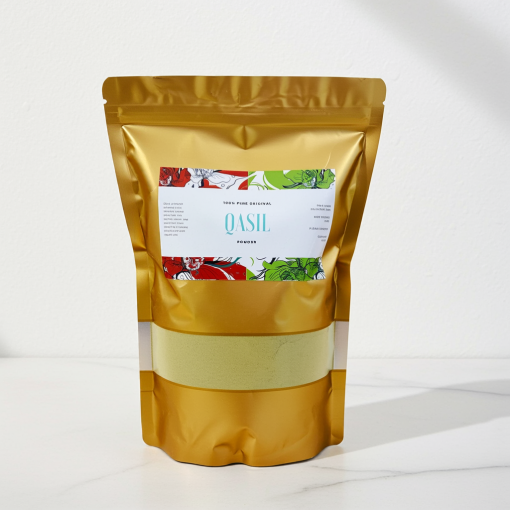
Qasil Powder | Natural Exfoliant 1kg
- Qasil powder helps soothe irritated skin after exposure to the sun. Its naturally calming qualities aid in reducing redness and irritation, speeding up healing, and peeling.
- Qasil powder is perfect as an under-eye mask. Its cooling and anti-inflammatory properties help reduce puffiness and dark circles under the eyes. Regular application can brighten the eye area, giving you a more refreshed and youthful appearance.

Book: Returning To Nature’s Ancient Pharmacy -An African Approach To Natural Remedies
What You’ll Discover:
- Daily Herbal Remedies backed by Scripture and tradition
- Natural healing foods like raw honey, fermented drinks, and superfruits
- Uses of animal fats like tallow, ghee, and bone broth
- African healing plants like hibiscus, tamarind, and baobab
- Teas and Adaptogens for stress, energy, and hormone balance
- Spiritual insights on God’s design for healing and wellness
- Practical recipes, homemade remedies, and devotional reflection

