

Agriculture, Trade
Kenya Tea: The Volume-Value Paradox and a Pricing Crisis
Aug
652,792 MT exported · revenue fell 1%
+1.5% YoY · supply tightening effect
Far smaller volume · higher unit value
Near-double Kenya’s per-kg return
Kenya Tea: The Volume-Value Paradox and a Pricing Crisis
Kenya exported more tea in 2025 than at any point in its history — and earned less for it than the year before. While Sri Lanka earns nearly double per kilogram and Rwanda commands a higher unit price at Kenya’s own auction, the world’s largest black tea exporter by volume is shipping more to make less. Add the loss of Iran and Sudan, an ongoing war that has blocked eight million kilograms at Mombasa port, a new Tea Levy that makes Kenyan tea more expensive than its competitors, and a KTDA bonus season that left smallholder farmers in the Rift Valley with payments 30% below the prior year — and a structural crisis comes into focus.
There is a particular kind of agricultural irony that afflicts nations which grow the world’s most wanted commodities in the world’s most efficient volumes, and then watch the revenues fail to materialise in proportion. Kenya has been navigating this irony in its tea sector for years. In 2025, the numbers made it impossible to look away.
The country exported 652,792 tonnes of tea — a new record, 4.35% above the prior year — and shipped to 100 countries across every continent. Yet export earnings fell 1% to KShs 186.9 billion. The average auction price at Mombasa, the world’s largest black tea auction, slipped from $2.19 per kilogram in 2024 to $2.15 in 2025. At the same auction, Rwanda’s tea fetched $3.24 per kilogram. At the Colombo auction in Sri Lanka, prices held at approximately USc 396 per kilogram — nearly double the Kenyan benchmark. This is the paradox: Kenya leads the world in tea export volume and trails the market in value per tonne. The crisis of 2026, with its geopolitical shocks and self-inflicted policy wounds, is not the cause of this structural problem. It is its amplification.
The Structural Arithmetic: Volume Without Value
To understand Kenya’s tea vulnerability requires understanding what the auction price conceals. The 652,792 tonnes exported in 2025 were overwhelmingly CTC — Cut, Tear, Curl — tea. CTC processing, which reduces tea leaves to small, uniform pellets optimised for tea bags and blending, accounts for approximately 97–98% of Kenya’s total output. It is efficient, scalable, and entirely suited to the mass market. It is also, by definition, a commodity.
Commodity pricing obeys commodity logic: at high volumes, with a standardised product, and with multiple competing origins supplying similar material, the price compresses toward a structural floor. Kenya’s CTC tea, predominantly sold in bulk at the Mombasa auction, is purchased by global blenders — Unilever, Twinings, Tetley — who mix Kenyan leaf with Assam, Darjeeling, or Sri Lankan grades to produce the branded products that command retail shelf premiums. Kenya produces the raw material. Others capture the margin. This value chain structure is the foundational problem, and it is not new.
What makes 2025–2026 different from prior years of this structural problem is the simultaneity of the pressures bearing down on it. A second consecutive year of global tea price decline is tightening the commodity margin further. The two most significant non-commodity loss events in Kenya’s export history — the Iran suspension and the Sudan ban — have removed markets that absorbed 100 million kilograms of tea annually, with no replacement at equivalent value terms yet secured. A new Tea Levy has introduced a competitive disadvantage against regional origins at the very auction where Kenya should hold structural advantage. And an unresolved Middle East conflict has physically blocked shipments, parked containers at the Port of Mombasa, and translated into losses that the sector’s own leadership quantifies at $8 million per week.
The Geopolitical Wound: Iran, Sudan, and Eight Million Kilograms Stranded
Pakistan remains Kenya’s largest single tea export market by considerable margin: 235.13 million kilograms in 2025, representing 36% of total export volume and KShs 73.41 billion in earnings. But the geography of Pakistan’s connectivity to the world’s ocean freight networks runs directly through the same corridor — the Persian Gulf, the Strait of Hormuz, and the Salala trans-shipment port — that the U.S.-Israeli conflict with Iran has disrupted since early 2026. Approximately 40% of Kenya’s tea moves through Salala. The disruption is not abstract; it is logistical, financial, and immediate.
The Iran dimension carries a second, more damaging layer. Before the current conflict intervened, Kenya had already lost the Iranian market to a $20 million fraud scandal in 2024, in which tea consignments were misrepresented and foreign currency diverted. Tehran suspended imports, cutting off roughly 86% of Kenya’s Iranian shipments. By the time high-level diplomatic talks — including interventions by Prime Cabinet Secretary Musalia Mudavadi and Agriculture Cabinet Secretary Mutahi Kagwe — produced the outline of a resolution in August 2025, the conflict had rendered the diplomatic progress moot. Iran is now inaccessible on two grounds simultaneously: political and logistical.
The UAE compounds this picture further. Not only is the UAE a direct buyer of Kenyan tea, receiving 32.54 million kilograms in 2025 — it is the primary trans-shipment hub through which Kenyan tea reaches markets across the Middle East and Central Asia. Disruption to the UAE’s commercial environment radiates outward through every corridor that depends on Dubai as a redistribution node.
Export Destination Map: Who Buys Kenya’s Tea, and Who Doesn’t Anymore
| Market | 2025 Volume | 2025 Value | Share | Status |
|---|---|---|---|---|
| Pakistan | 235.13M kg | KSh 73.41B ($568.6M) | 36% | At Risk |
| Egypt | 90.70M kg | — | ~14% | Stable |
| United Kingdom | 56.39M kg | — | ~9% | Stable |
| UAE (+ transit hub) | 32.54M kg | — | ~5% | At Risk |
| Russia | 27.44M kg | — | ~4% | Stable |
| Iran | Suspended | — | Historically significant | Market Lost |
| Sudan | 1.79M kg (−69%) | — | Collapsed Q1 2026 | Trade Ban |
| Germany | Targeted development | — | Orthodox tea focus | Developing |
| Kazakhstan / C. Asia | Hub in Astana proposed | — | New corridor | Developing |
The Tea Levy: A Self-Inflicted Competitive Wound
To the geopolitical pressures, Kenya has added a structural policy disadvantage of its own design. The Tea Levy Regulations 2026, which took effect earlier this year, reintroduce a levy payable by Kenyan tea exporters at 0.8% of the auction value. Importers are charged 100% of the import value per consignment. The levy applies exclusively to Kenyan tea. Tea traded at the Mombasa auction originating from Rwanda, Burundi, Uganda, Tanzania, or Malawi does not carry the equivalent burden.
The arithmetic consequence is elementary: at a base auction price of $2.15 per kilogram, the 0.8% levy adds a fraction of a cent per kilogram — but in a market where buyers are operating on margins measured in cents, the signal matters as much as the absolute cost. At the most recent weekly auction (Sale 22), 27% of the 12.52 million kilograms offered remained unsold — the highest unsold rate recorded this year. Industry buyers have explicitly attributed the shift toward Rwandan and Burundian teas at the auction to the levy’s distortive effect on relative pricing. Rwanda’s tea, already fetching $3.24 per kilogram versus Kenya’s $2.15, is now cheaper on an all-in basis for buyers looking to manage their cost structure.
Kenya is the world’s largest black tea exporter. In 2026, it has found a way to make its own tea more expensive than its competitors’ at its own auction. The Tea Levy is not a revenue measure. It is a competitive tax on the sector that can least afford one.Fava Herb Commodities Intelligence · Q3 2026 Analysis
The Farmer at the End of the Chain: KTDA Bonuses and Rural Consequences
Commodity market analysis conducted at the level of futures prices, auction averages, and export tonnage can obscure the human arithmetic that sits at the end of the value chain. In Kenya’s tea sector, that arithmetic resolves to a smallholder farmer who delivers green leaf to a KTDA factory and waits for a quarterly payment and an annual bonus that together constitute the primary income of approximately 650,000 smallholder households and support an estimated six million rural dependants.
The 2024/25 KTDA bonus season was, by the agency’s own account, a year of declining returns. Kericho farmers — in the heart of the country’s premier tea-growing region — received KShs 245 per kilogram in bonus payments, down from KShs 346 the prior year, a 29% decline. KTDA attributed the drop to international market conditions and unfavourable currency movements: the Kenyan shilling strengthened from an average of KShs 144 to KShs 129 against the dollar, effectively reducing the shilling value of every dollar of tea export revenue by approximately KShs 15 per dollar. That single currency movement, KTDA estimates, reduced aggregate farmer earnings by approximately KShs 15 per kilogram across the season.
Green leaf production also contracted sharply: from 1.4 billion kilograms in 2024 to 1.24 billion kilograms in 2025, a 12% decline driven by erratic rainfall, labour constraints, and localised pest pressures. Production decline and price decline arrived simultaneously — the worst possible combination for a sector in which smallholder farmers have limited capacity to absorb income shocks through reserves or diversification.
The Value Addition Imperative: Orthodox, Purple, and the KSh 100 Target
Against this backdrop, every voice of institutional authority in Kenya’s tea sector is articulating the same response: value addition. The government has committed KShs 3.5 billion to factory modernisation through KTDA-affiliated factories. The stated target is to raise farmer earnings to KShs 100 per kilogram by 2027. Agriculture Cabinet Secretary Mutahi Kagwe, speaking at International Tea Day 2026, stated directly that Kenya’s continued overreliance on black CTC tea and a limited set of export markets had exposed the industry to price volatility and external shocks.
The direction is unambiguous. Tea Board of Kenya CEO Willy Mutai has committed to positioning Kenyan tea as a premium global brand. KTDA is rolling out orthodox tea production lines in multiple factories. In September 2025, Kenya launched the first dedicated orthodox tea auction at Mombasa — a recognition that the CTC auction mechanism is insufficient to capture the premium that orthodox production commands. Specialty tea — currently just 2.82% of total production — encompasses black orthodox, green orthodox, and Kenya’s genuinely distinctive innovation: purple tea, a cultivar developed by the Tea Research Institute of Kenya (TRFK) that contains anthocyanins not found in conventional black or green tea.
New Market Architecture: Germany, Kazakhstan, and the AfCFTA Angle
Kenya’s market diversification response is taking shape, but the timelines deserve honest examination. In February 2026, Germany and Kazakhstan both completed week-long familiarisation tours of Kenya’s orthodox tea industry — visiting factories, observing the full value chain from farm to processing, and holding substantive meetings with the Kenya National Chamber of Commerce and EATTA. Kazakhstan’s Ambassador proposed the establishment of a Kenyan tea and coffee hub in Astana, offering incentives to Kenyan exporters as a conduit into Central Asian markets. Germany’s delegation was focused specifically on the orthodox category and sustainable production credentials.
These are encouraging signals. They are also precisely the kind of signals that take two to five years to translate into commercial-scale volume. Germany and Kazakhstan cannot, in the near term, absorb the 100 million kilograms per year that Iran and Sudan represented at peak. Nor will they purchase at CTC bulk prices — the orthodox and specialty category is the entry point, which is precisely why the domestic production shift toward specialty tea is not merely a value-add aspiration but a market access prerequisite.
The AfCFTA dimension is also being actively mobilised. Kenya Export Promotion and Branding Agency CEO Floice Mukabana has publicly called on the tea sector to look inward toward African continental markets as a mitigation strategy for the Middle East disruption. Intra-African tea consumption is growing — Nigeria, South Africa, Ethiopia, and the East African Community’s expanding middle class represent genuine demand growth. But intra-African tea trade faces the same infrastructure constraints as intra-African grain trade: logistics, cold chain, payment settlement, and the absence of developed wholesale distribution networks in destination markets.
Conclusion: Volume Is Not a Strategy
Kenya’s tea sector has a geographic and agronomic endowment that most tea-producing nations in the world would trade their market positions for. The volcanic soils of the central highlands, the altitude of the Aberdare Range and the Rift Valley escarpment, the double-harvest cycle that provides year-round supply — these are structural advantages that Sri Lanka, India, and China cannot replicate in the Kenyan highlands. The failure to convert these advantages into price is not a production problem. It is a product mix problem, a market architecture problem, a policy problem, and a brand problem.
The 652,792 tonnes exported in 2025 represent an extraordinary logistical and agronomic achievement. The $1.44 billion earned from those 652,792 tonnes represents the price of not yet having solved the deeper question: what is Kenya’s tea worth when it carries its own identity rather than disappearing into someone else’s blend?
Sri Lanka earns approximately $3.96 per kilogram. Rwanda earns $3.24 at Kenya’s own auction. Kenya earns $2.15. The difference is not altitude. It is not quality. It is the decision — at national, institutional, and factory level — to keep selling the raw ingredient rather than the finished product. Until that decision changes at scale, the volume record will continue to be accompanied by the revenue paradox.
This desk will return to the Kenya tea story at the conclusion of the Africa Tea Convention in September, and again when the Mombasa auction closes its Q4 results. The trajectory of the reform agenda — KTDA factory conversions, Tea Amendment Bill passage, the Levy decision, and the Iran diplomatic resolution — will determine whether 2027 marks a genuine inflection or another year of record volume and declining value.
DATA SOURCES: Kenya National Bureau of Statistics (KNBS) · East African Tea Trade Association (EATTA) · Tea Board of Kenya (TBK) · Kenya Tea Development Agency (KTDA) · International Monetary Fund Primary Commodity Prices (FRED/St. Louis Fed) · Expana Markets (February 2026) · Reuters / CNBC Africa (March–April 2026) · Daily Nation (Kenya) · Business Daily Africa · The East African · STiR Coffee and Tea Magazine (April 2026) · Kenya Broadcasting Corporation (KBC) · Serrari Group · Africa Sustainability Matters · Kenya Export Promotion and Branding Agency (KEPROBA)
How much tea does Kenya export?
What is the current price of Kenyan tea at the Mombasa auction?
Why did Kenya lose the Iran tea market?
What is the Tea Levy 2026 and how does it affect Kenyan exports?
What is the difference between CTC and orthodox tea in Kenya?
Which country buys the most Kenyan tea?
What are Kenya’s tea earnings targets for farmers?
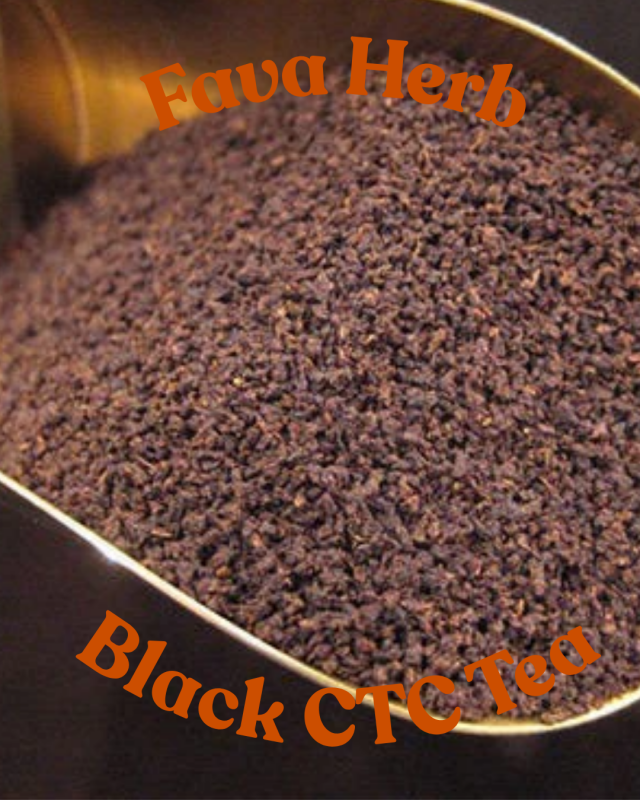
Uganda Black CTC Tea – Secondary Grades (PF, FNGS, BP) | Bulk Wholesale Export | USD 1,500–1,700 Per Tonne
Uganda Black CTC Tea — Secondary Grades (PF, FNGS, BP) available for bulk export at USD 1,500–1,700 per metric tonne. Sourced from Uganda’s premier highland tea estates, these grades deliver reliable colour, strength, and brewing consistency ideal for tea bag production, retail blending, and catering supply. FOB Mombasa as standard; CIF available. Private label arrangements welcome. Enquire for samples and a formal quotation.
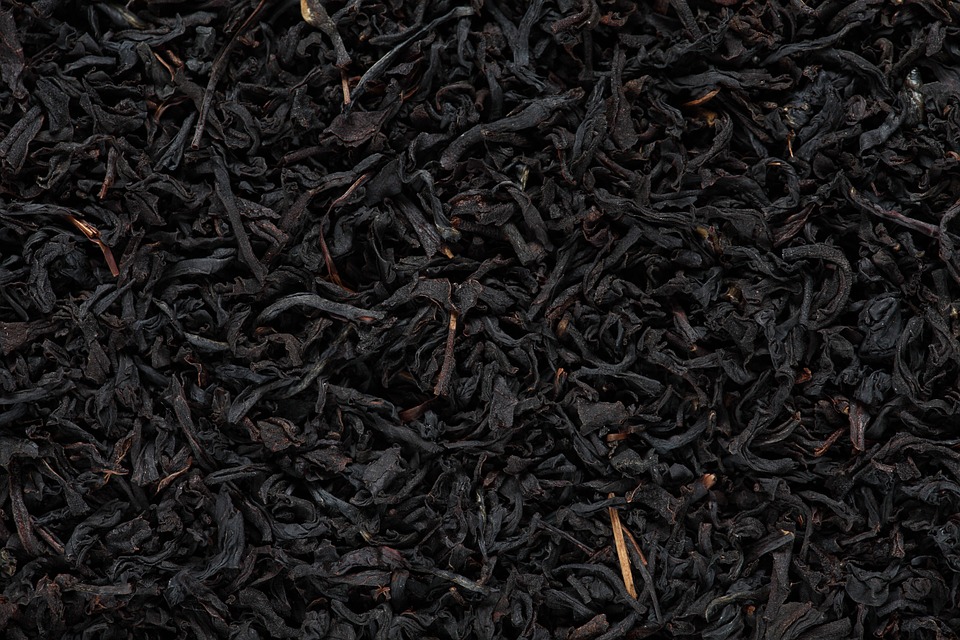
Black Orthodox Tea 1 metric tonne no MOQ
Pure black orthodox tea grown in Kenya.
Top, export quality.
All documentation provided.
Price is negotiable
NO MOQ
Shipping not included.

Book: Returning To Nature’s Ancient Pharmacy -An African Approach To Natural Remedies
What You’ll Discover:
- Daily Herbal Remedies backed by Scripture and tradition
- Natural healing foods like raw honey, fermented drinks, and superfruits
- Uses of animal fats like tallow, ghee, and bone broth
- African healing plants like hibiscus, tamarind, and baobab
- Teas and Adaptogens for stress, energy, and hormone balance
- Spiritual insights on God’s design for healing and wellness
- Practical recipes, homemade remedies, and devotional reflection

