
Healthy Life
East African Shea Nilotica: Cooking Oil, Skin Butter and the Shea Fruit
Oct
Shea Nilotica:
Cooking Oil, Skin Butter
and the Shea Fruit
South Sudan and Uganda’s wild shea tree — used as a cooking fat for centuries before the world ever heard of shea butter, with a sweet, vitamin-rich fruit that almost nobody outside the region has tasted.
Exceptionally rich in vitamin C
Eaten fresh, in season
Rarely covered outside the region
High oleic-to-stearic ratio
Deep barrier repair
Faster absorption than firmer shea
Smoke point ~200–230°C
Nutty, slightly smoky flavour
Centuries of everyday use
- What Is Shea Nilotica?
- South Sudan and Uganda’s Tree of Life
- Shea Nilotica vs West African Shea
- Active Compounds and Fatty Acid Profile
- The Shea Fruit: An Overlooked Superfood
- Skin and Hair Benefits
- Shea Nilotica as a Cooking Oil
- How to Use All Three Forms
- Safety and Storage
- Frequently Asked Questions
When most people hear “shea butter,” they picture West Africa — Ghana, Burkina Faso, the cosmetic aisles of global skincare brands. Far less known, even within Africa itself, is Shea Nilotica (Vitellaria nilotica), the East African shea species that grows wild across South Sudan, northern Uganda, and the borderlands of the Democratic Republic of Congo and Ethiopia. It is the same genus, a closely related subspecies, and a tree that has supported the diets, economies, and skin care of East African communities for just as long as its West African cousin — yet it tells a notably different story.
The most striking difference is this: in South Sudan and Uganda, the shea tree has historically been valued first and foremost as a source of cooking oil — a daily kitchen staple, not primarily a cosmetic ingredient. Its butter, once melted and rendered, has a naturally softer, more spreadable texture than much West African shea, a result of a meaningfully different fatty acid ratio. And then there is the part of the tree that almost nobody outside the region has ever encountered: the shea fruit itself — the sweet, vitamin C-rich pulp that surrounds the nut, eaten fresh by children and families during the harvest season, and almost entirely absent from international shea butter content and commerce.
This guide gives all three gifts of the shea nilotica tree the attention they deserve: its traditional and modern use as a cooking fat, its skin and hair benefits, and the nutrition and culture of the shea fruit — alongside a clear, evidence-based comparison with the West African shea most consumers already know.
What Is Shea Nilotica?
- Botanical Name
- Vitellaria nilotica
- Taxonomic Note
- Sometimes classed as V. paradoxa subsp. nilotica
- Plant Family
- Sapotaceae
- Growing Region
- South Sudan, N. Uganda, NE DRC, SW Ethiopia
- Local Name
- “Lulu” (South Sudan)
- Parts Used
- Fruit, Nut (for oil/butter)
- Texture
- Softer, more spreadable than West African shea
- Traditional Primary Use
- Cooking fat
Shea Nilotica is a wild-growing tree of the savanna and woodland zones of the Nile Basin and surrounding regions — its species name nilotica directly referencing the Nile, around whose tributaries and floodplains the tree is most densely concentrated. Like its West African relative Vitellaria paradoxa, it is a slow-growing, long-lived tree that can survive well over a century and does not reach significant nut production until 20 to 30 years of age. It has never been successfully brought into commercial plantation cultivation — every shea nilotica nut, like every West African shea nut, is hand-harvested from wild trees, almost entirely by women and children, after the ripe fruit falls naturally to the ground.
In South Sudan, the tree and its fruit are known by the local name “lulu” across many of the country’s ethnic communities, and it holds a position in daily life that goes well beyond a simple cash crop. The tree provides food (the fruit), cooking fat (the nut oil), skin and hair care (the same nut butter, applied externally), and in difficult seasons, a critical nutritional safety net for rural families. This breadth of practical use across food, fuel for cooking, and personal care is the central thread that distinguishes shea nilotica’s cultural role from the West African shea economy, where the cosmetic and export market has come to dominate the conversation.
South Sudan and Uganda’s Tree of Life
South Sudan is home to some of the densest wild shea tree populations found anywhere in Africa, with the trees so deeply embedded in rural life that the species is frequently referred to locally as a “tree of life.” Shea nilotica trees are protected under customary land management practices across many South Sudanese communities — when land is cleared for farming, shea trees are deliberately left standing, a practice that has preserved enormous wild shea populations across the country’s savanna landscapes for generations, even amid decades of conflict and displacement that disrupted much of the country’s formal agricultural economy.
Across northern Uganda — particularly the West Nile and Acholi sub-regions — shea nilotica trees form a similarly important part of the rural landscape and economy. Following decades of conflict in northern Uganda, shea has become an increasingly important focus for post-conflict economic recovery programmes, with international development organisations and local cooperatives working to build sustainable shea value chains that provide rural women with reliable income while preserving the wild tree populations that the entire system depends on.
Among the densest wild shea populations in Africa. Known locally as “lulu.” Central to food security, cooking, and rural household economies across multiple states.
West Nile and Acholi sub-regions hold significant shea populations. Growing focus on shea-based post-conflict economic recovery and women’s cooperative development.
Shea nilotica populations extend into the savanna borderlands of northeastern DRC, supporting similar traditional food and cooking oil uses among local communities.
Shea populations extend into the Gambela and surrounding lowland regions of southwestern Ethiopia, an area of overlapping ecological and cultural connection to South Sudan.
Because shea nilotica has remained primarily a subsistence and local-market resource rather than a major international export crop — unlike West African shea, which supplies a multi-billion-dollar global cosmetics industry — it remains comparatively undocumented in international scientific and commercial literature. This is gradually changing as development organisations, fair-trade initiatives, and a small but growing number of specialty importers work directly with South Sudanese and Ugandan producer communities to bring this distinctive East African shea to wider markets, providing meaningful income diversification in regions where economic opportunities are often limited.
- Tree Lifespan
- 100+yrswild-growing, never cultivated
- Production Start
- 20–30yrsbefore significant nut yield
- Local Name
- LuluSouth Sudan’s name for the tree
- Primary Use
- Foodfruit, oil, and cooking fat first
Shea Nilotica vs West African Shea
Shea nilotica and West African shea (Vitellaria paradoxa) are close botanical relatives — so close that taxonomists continue to debate whether nilotica should be classified as a fully distinct species or a subspecies of paradoxa. For the purposes of practical use, however, the differences that matter most to consumers, cooks, and skincare formulators are clear and consistent.
| Property | Shea Nilotica (East Africa) | West African Shea |
|---|---|---|
| Botanical Classification | Vitellaria nilotica | Vitellaria paradoxa |
| Growing Region | South Sudan, N. Uganda, NE DRC | Ghana, Burkina Faso, Mali, Nigeria |
| Texture at Room Temp | Softer, semi-soft to spreadable | Firmer, often hard and waxy |
| Oleic-to-Stearic Ratio | Generally higher oleic content | Generally higher stearic content |
| Primary Traditional Use | Cooking fat, then skin/hair care | Skin/hair care, also used in cooking |
| Global Commercial Scale | Small, emerging market | Large, established global export industry |
| Absorption on Skin | Faster, less waxy after-feel | Slower, more occlusive after-feel |
| Documentation Level | Limited international research | Extensively studied and documented |
Neither variety is objectively “better” — they are different expressions of the same broad therapeutic and nutritional profile, suited to slightly different applications and personal preferences. Those who prefer a lighter, faster-absorbing butter for facial use, or who want a shea variety with genuine everyday culinary application, often gravitate toward nilotica once they have the opportunity to try it. Those who prefer a firmer, more deeply occlusive butter for very dry climates or for use in solid cosmetic formulations such as balms and sticks may prefer the harder texture more typical of West African shea.
Active Compounds and Fatty Acid Profile
Shea nilotica shares the core phytochemical profile that defines all shea butter — a fatty acid composition well-matched to human skin biology, combined with unsaponifiable triterpenes and fat-soluble vitamins. The key practical difference lies in the balance between its two dominant fatty acids.
| Compound | Class | Key Therapeutic Actions |
|---|---|---|
| Oleic Acid (elevated) | Monounsaturated fatty acid | Drives nilotica’s characteristic softness and faster skin absorption; deeply nourishing without heavy occlusion; supports skin penetration of other compounds |
| Stearic Acid | Saturated fatty acid | Provides structural firmness and emollient barrier support; present at a comparatively lower ratio than in much West African shea |
| Triterpenes (Lupeol, Amyrins) | Unsaponifiable triterpenoid | Anti-inflammatory via lipoxygenase and COX pathway inhibition; collagen-supportive; central to shea’s wound-healing and anti-ageing properties |
| Cinnamic Acid Esters | Phenolic ester | Natural UV-absorbing compounds; mild antioxidant and photoprotective contribution — not a substitute for SPF sunscreen |
| Vitamin A (Carotenoids) | Fat-soluble vitamin | Supports skin cell turnover and collagen synthesis; present at meaningful levels in raw, minimally processed nilotica butter |
| Vitamin E (Tocopherols) | Fat-soluble vitamin | Antioxidant protection against lipid peroxidation; supports skin and oil shelf stability |
| Vitamin C (fruit pulp only) | Water-soluble vitamin | Present in significant concentration in the fresh fruit pulp surrounding the nut — not retained in the pressed nut oil or butter |
The elevated oleic acid content relative to stearic acid is the single biological feature most responsible for shea nilotica’s distinctive character. Oleic acid has a lower melting point and a smaller, more fluid molecular structure than stearic acid, which is why butters higher in oleic acid remain softer at room temperature and spread more readily across skin without requiring the warming and rubbing between the palms that firmer, more stearic-dominant shea butter often needs. This same fluidity also makes nilotica oil naturally more suited to use as a liquid cooking fat — a quality that almost certainly contributed to its historical adoption as a kitchen staple across South Sudan and Uganda, long before international commerce ever turned its attention to shea as a skincare ingredient.
The Shea Fruit: An Overlooked Superfood
Almost everything written about shea — in West Africa and internationally — focuses exclusively on the nut and the butter pressed from it. The fruit itself, the sweet pulp that surrounds the nut before it is discarded or composted in most processing operations, is rarely mentioned at all outside the communities who actually harvest shea trees. This is a significant oversight: the shea fruit is a genuinely delicious, nutritious, and entirely natural seasonal food that deserves far more attention than it currently receives.
When ripe, the shea fruit has a soft, custard-like pulp with a flavour often described as similar to a sweet, slightly tangy avocado crossed with a ripe persimmon. Its texture is smooth and somewhat fibrous immediately around the central nut. Across South Sudan, Uganda, and other parts of the shea growing region, the fruit is eaten fresh, straight from the ground or the tree, almost exclusively during the relatively short harvest season — typically falling within the regional rainy season months. Children in particular are known to eat the fruit in large quantities while playing in the bush, and it is considered a genuinely beloved seasonal treat rather than a survival food, despite also providing meaningful nutrition during a season when other food sources can be scarce.
Nutritional Highlights of the Fresh Fruit Pulp
Research into shea fruit pulp composition — though far more limited than the extensive literature on shea nut oil — has consistently identified the fruit as an exceptional source of vitamin C, with some analyses indicating the fresh pulp contains several times the vitamin C concentration of an orange by comparable weight. This is a remarkable and underappreciated nutritional fact: a wild, free, seasonally abundant fruit growing across some of the most food-insecure regions of East Africa carries an antioxidant and immune-supporting nutrient density that rivals or exceeds many cultivated commercial fruits.
The shea fruit is almost never processed, preserved, or sold commercially outside its growing region — its relatively short shelf life once picked, combined with the lack of established post-harvest handling infrastructure, has kept it almost entirely a local, subsistence-level food. This represents both a genuine nutritional resource currently underutilised at scale, and an interesting area of potential future product development — dried shea fruit snacks, fruit leather, or juice concentrate are all plausible value-added products that could bring this fruit’s benefits to a far wider audience while creating additional income streams for the same communities already engaged in shea nut harvesting.
Because the shea fruit is highly perishable and has no established cold chain or export infrastructure, it is realistically not something most readers outside East Africa will be able to purchase fresh. It is included in this guide because understanding the complete shea tree — not just the commercially exported nut butter — provides important context for the cultural and nutritional significance of this remarkable species, and may inform future product development as East African shea value chains continue to mature.
Skin and Hair Benefits
Shea nilotica delivers the same core therapeutic benefits associated with all shea butter, while its naturally softer texture gives it a few practical advantages for everyday skin and hair application, particularly for those who find harder shea butter varieties difficult to work with.
Effortless Application
Its naturally softer, semi-spreadable texture means it can often be applied directly without the extended palm-warming or melting required for firmer shea varieties — a genuine practical advantage for daily use.
Faster Absorption
The higher oleic acid content allows quicker penetration into the skin, leaving a less waxy after-feel than firmer, more stearic-dominant shea butters — well suited to facial application.
Deep Barrier Repair
Shares the same skin-compatible fatty acid profile and anti-inflammatory triterpene content as all shea varieties — effective for dry skin, eczema, and general barrier support.
Hair and Scalp Nourishment
Its lighter texture makes it more readily absorbed into hair strands without the heavy buildup sometimes associated with firmer shea — particularly suited to fine to medium hair textures.
Anti-Ageing Support
Triterpenes stimulate collagen-producing fibroblast activity while providing antioxidant protection against UV-driven oxidative skin ageing.
Soothing for Sensitive Skin
The same anti-inflammatory compound profile found across shea varieties calms irritation, redness, and minor skin reactivity, with the lighter texture often better tolerated by combination skin types.
Shea Nilotica
Butter
Raw East African Shea Nilotica Butter
Hand-processed shea nilotica from South Sudanese and Ugandan producer communities — naturally soft, fast-absorbing, and minimally processed to retain its full vitamin A, vitamin E, and triterpene profile. A genuinely different texture from West African shea.
Shop Now View All East African ProductsShea Nilotica as a Cooking Oil
Long before shea entered the global cosmetics market, communities across South Sudan and northern Uganda were using rendered shea nilotica oil as an everyday cooking fat — a tradition that continues in rural kitchens today. Understanding this culinary heritage is essential to understanding the tree’s true cultural significance, which extends well beyond the skincare applications most international audiences associate with shea.
General Purpose Cooking Fat
Traditional smoke point of approximately 200 to 230°C makes food-grade shea nilotica oil suitable for frying vegetables, meat, and fish, and for general sautéing in everyday cooking.
Distinctive Nutty Character
Unrefined shea nilotica oil carries a naturally nutty, slightly smoky flavour that is a defining characteristic of traditional South Sudanese and northern Ugandan cuisine, distinct from neutral commercial cooking oils.
Traditional Staple Dishes
Used as a flavouring and enriching fat stirred into bean stews, vegetable dishes, and grain-based porridges — a daily kitchen staple comparable to how groundnut or palm oil is used elsewhere in Africa.
Traditional Food Storage
In some traditional practices, shea oil has also been used as a natural coating to help preserve certain stored foods, taking advantage of its naturally high stability and resistance to rapid rancidity.
For those interested in trying shea nilotica as a cooking oil, it is best approached the way one might approach a specialty unrefined olive oil — used thoughtfully for its distinctive flavour contribution rather than as a neutral, all-purpose frying medium. Its character shines particularly in slow-cooked stews, roasted vegetables, and traditional East African dishes where its nutty depth can fully develop, rather than in high-volume, high-temperature commercial frying applications where flavour-neutral oils are typically preferred.
How to Use All Three Forms
-
CookingEveryday Sautéing and Frying
Use food-grade shea nilotica oil in place of vegetable oil or ghee for sautéing onions, garlic, and vegetables, or for shallow-frying fish, meat, or plantain. Its smoke point of approximately 200 to 230°C accommodates most everyday stovetop cooking. Start with a small amount to become familiar with its distinctive nutty flavour profile before using it as a primary cooking fat in larger quantities.
-
CookingTraditional Stews and Porridge
Stir one to two tablespoons of shea nilotica oil into bean stews, lentil dishes, or grain porridges during the final stages of cooking, in the traditional East African manner. This adds both richness and its characteristic flavour without requiring the oil to withstand high direct heat, preserving more of its natural character and nutritional profile.
-
SkinDaily Facial and Body Moisturiser
Because of its naturally softer texture, shea nilotica can often be applied directly to skin with minimal warming — simply scoop a small amount and smooth it on. Apply to slightly damp skin after bathing for best absorption. Its lighter after-feel makes it a popular choice for facial use among those who find firmer shea butter too heavy or waxy for daily application.
-
HairHair and Scalp Treatment
Work a small amount through damp or dry hair from mid-lengths to ends, taking advantage of its faster absorption and lighter residue compared to firmer shea varieties. For a scalp treatment, massage gently into the scalp before bed and wash out in the morning, or use as a 20-minute pre-wash deep conditioning treatment under a warm towel.
-
FruitIf You Are Fortunate Enough to Find It Fresh
For those visiting or living in South Sudan, northern Uganda, or other shea-growing regions during the harvest season, the fresh shea fruit can simply be eaten out of hand once ripe, much like a small persimmon or sweet avocado — discard the central nut (which can then be processed into oil) and enjoy the sweet pulp fresh. It does not keep well once picked, so it is best eaten the same day for full flavour and nutritional value.
Cooking
Oil
Food-Grade Shea Nilotica Cooking Oil
Traditionally rendered, unrefined shea nilotica oil from South Sudanese producer communities — a genuine taste of East African culinary heritage. Naturally nutty flavour, suitable for sautéing, frying, and traditional stew preparation.
Shop Cooking OilSafety and Storage
Safety, Storage and Important Notes
- Food-grade vs cosmetic-grade: Confirm whether the product you are purchasing is labelled food-grade before using it for cooking. Not all shea butter or oil sold for cosmetic purposes is processed or certified to food safety standards, even when it shares the same basic origin and extraction method.
- Tree nut allergy: As with all shea products, those with significant tree nut allergies should patch test before topical use and consult an allergist before culinary use if there is any history of tree nut sensitivity, although shea’s protein content after processing is generally very low.
- Texture and storage: Shea nilotica’s naturally softer texture means it can become quite liquid in warm climates or during hot seasons. Store in a cool, dry place away from direct sunlight; refrigeration is not required but can help maintain a firmer texture in very warm conditions if preferred for skincare application.
- Cooking oil storage: Store food-grade shea nilotica oil in a sealed, dark glass or food-safe container away from heat and light. Use within the timeframe specified by the supplier, generally 12 to 18 months for properly stored unrefined oil.
- Sourcing transparency: Given the smaller, less internationally regulated market for East African shea compared to West African shea, seek out suppliers who can clearly document their sourcing region and producer relationships, particularly given the more limited formal export infrastructure historically available in South Sudan.
- Patch testing: As with any new skincare product, patch test on a small area of skin and wait 24 hours before broader application, particularly for facial use.
Frequently Asked Questions
These answers address the highest-volume and most distinctive searches around shea nilotica, written for featured snippet and People Also Ask placement.
What is Shea Nilotica?
Can you cook with shea oil?
What is the difference between shea nilotica and regular shea butter?
Can you eat the shea fruit?
Is shea nilotica good for skin?
Where does shea nilotica grow?

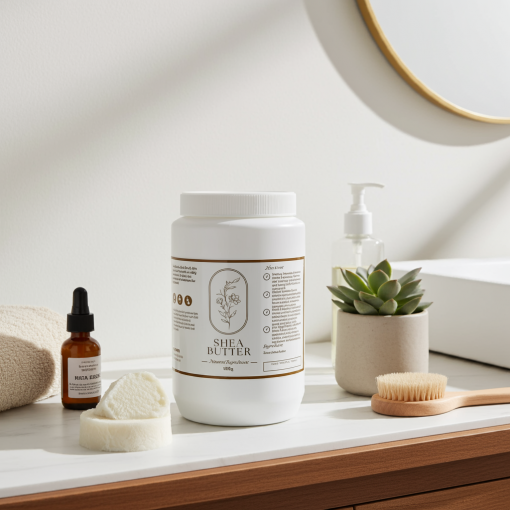

Raw Unrefined Shea Nilotica Butter | East African Origin, 100% Natural 1Kg
Raw, unrefined East African shea nilotica butter — softer and faster-absorbing than standard shea. Natural, additive-free, ideal for skin, hair, and formulations. Our lead time from production to loading for shipping is is 5-10 days. Price excludes shipping.

Book: Returning To Nature’s Ancient Pharmacy -An African Approach To Natural Remedies
What You’ll Discover:
- Daily Herbal Remedies backed by Scripture and tradition
- Natural healing foods like raw honey, fermented drinks, and superfruits
- Uses of animal fats like tallow, ghee, and bone broth
- African healing plants like hibiscus, tamarind, and baobab
- Teas and Adaptogens for stress, energy, and hormone balance
- Spiritual insights on God’s design for healing and wellness
- Practical recipes, homemade remedies, and devotional reflection

