
Agriculture, Trade
Goat & Sheep: The Hajj Economy and Trade Statistics of Goats and Sheep
Oct
Fava Herb Livestock Report — Issue III of V
Goat & Sheep: The Hajj Economy
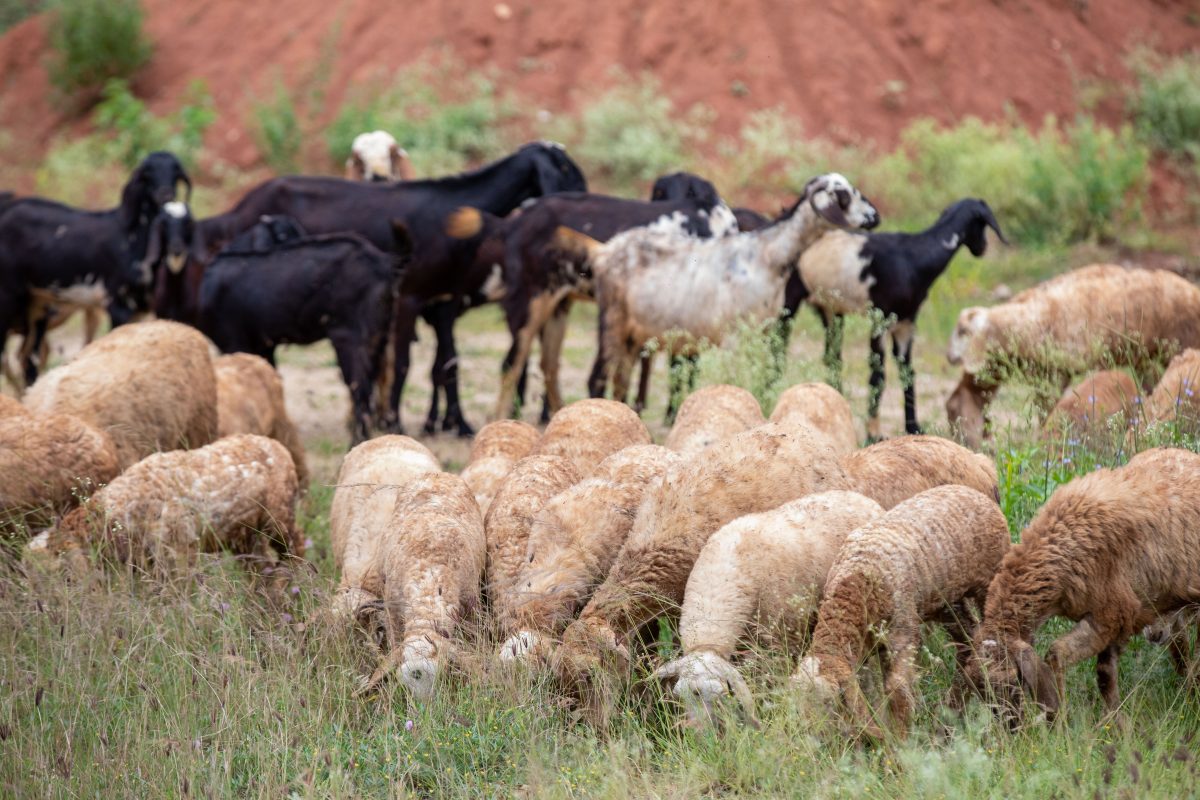
Nearly 3.5 million sheep and goats leave Somaliland’s port of Berbera each year, most of them within weeks of the Hajj. It is one of the Horn of Africa’s largest formal livestock export flows — and one of its least equitable, capturing most of its value long after it leaves the herder’s hands.
No livestock trade in the region is as concentrated, as seasonal, or as formally documented as the small-ruminant export corridor running from the Horn of Africa’s interior to the Arabian Peninsula through the port of Berbera. In 2024, Somaliland exported 3,802,903 head of livestock through Berbera — 3,455,842 of them sheep and goats — making this the closest thing East Africa has to an industrial-scale, purpose-built live-export economy.
01A one-buyer, one-season trade
Saudi Arabia is overwhelmingly the destination for small-ruminant exports from the Horn of Africa, and the trade is sharply seasonal: roughly 70% of small-ruminant export volume moves during the Muslim Hajj season, when demand for sacrificial sheep and goats for Eid al-Adha spikes sharply. Yemen and Oman are secondary destinations, but these skew toward cattle rather than shoats. Up to one million sheep and goats have been recorded crowding Berbera’s quarantine pens during peak season alone, arriving from markets across the Horn to be shipped across the Gulf of Aden in the weeks before the pilgrimage.
This concentration makes livestock the dominant force in Somaliland’s export economy — livestock has accounted for between 67% and 90% of total export earnings in recent years, rebounding to roughly 75% in 2024 after a multi-year dip. Up to 80% of Somaliland’s total export income is generated by sales of sheep, goat, camel and cattle combined, with sheep and goats the largest single component by volume.
02Ethiopia supplies the animals, Somaliland captures the value
The physical origin of most of these animals is not Somaliland itself. Estimates of the share of Berbera and Bosaso’s combined export volume originating in Ethiopia’s Somali Region range from 50% to 80% depending on the source, with roughly 65% cited as a working average across multiple studies. Yet the value captured at the point of formal export accrues almost entirely to Somaliland: export fees collected at Berbera run to US$3.50 per head of sheep or goat, US$18 per head of cattle, and US$35 per camel — revenue that Ethiopia’s own fiscal system never sees, since only small municipal market fees (as little as 1 Ethiopian Birr per shoat at Jijiga) are collected on the Ethiopian side, and none of that revenue is shared with the regional or national government.
Somali exporters have been documented purchasing a bull from Ethiopian pastoralists for around US$600 in cash paid in the informal cross-border market, conditioning the animal for roughly 14 days in a Berbera quarantine facility, then selling it into the Middle Eastern market for over US$1,200 — more than double the price paid to the pastoralist who raised the animal for years. Ethiopia’s own exporters lack the qualified, internationally recognised quarantine infrastructure that Somaliland, Djibouti and Sudan have built, which is what makes this arbitrage possible and durable rather than a one-off inefficiency.
03A trade defined by boom-and-bust shocks
Few livestock trades anywhere are as exposed to single-event shocks as this one. Saudi Arabia has twice imposed blanket livestock import bans on Horn of Africa exporters — most disruptively around 2000, citing Rift Valley Fever concerns — and in that episode Berbera’s exports collapsed from roughly 2 million head before the ban to just 50,000 head, a 97.5% collapse that devastated pastoralist incomes across the supply catchment for close to a decade before formal export volumes recovered. The COVID-19 pandemic delivered a more recent and more sudden version of the same shock: with Hajj effectively cancelled in 2020, Somalia’s livestock sector was projected to lose approximately US$500 million in a single season, with tens of thousands of livelihoods put at risk almost overnight.
Because roughly 70% of annual export value depends on a single religious calendar event each year, this is a sector where the concept of “seasonality” understates the actual risk profile — it is closer to a single annual settlement date on which the bulk of the year’s trading income depends, with essentially no way to shift that date or spread the exposure across the calendar.
| Shock event | Approximate impact | Recovery pattern |
|---|---|---|
| Saudi livestock ban, c. 2000 (Rift Valley Fever) | Berbera exports fell from ~2M to ~50,000 head | Multi-year; exports climbed back steadily after the 2009 lift |
| COVID-19 Hajj cancellation, 2020 | ~US$500M in projected lost Somali livestock export revenue | Single-season shock; recovered with resumption of Hajj travel |
“Somaliland commands up to 85% market share in the supply of goats… In this year’s Hajj season, the port will remain dormant and will not ship neither a goat nor sheep.”
04What this means for sourcing and finance
The Goat & Sheep trade is structurally different from every other issue in this series: it is the one segment where formal, port-based export infrastructure is genuinely mature — quarantine stations, an established fee schedule, decades of trading relationships with Gulf buyers — yet the value distribution across the supply chain remains almost as lopsided as the informal cross-border trades covered in the Beef & Cattle issue. The binding constraint on Ethiopian pastoralist income is not market access to the Gulf in the abstract; it is the absence of Ethiopia’s own internationally recognised quarantine and certification infrastructure, which is what currently forces its livestock through a Somaliland-controlled bottleneck at a steep discount.
For a trading and finance desk, that gap is also the opportunity: investment in quarantine and certification capacity on the Ethiopian side of the corridor — or direct commercial relationships with Ethiopian Somali Region traders positioned to sell closer to the border rather than through Berbera intermediaries — could capture margin currently lost to the arbitrage described above. Any financing structure in this space needs to explicitly model Hajj-date concentration risk and historical ban-driven volume collapses (a 97.5% single-event drawdown is not a tail scenario here, it is a documented precedent) rather than assuming smooth, calendar-linear revenue.
The full Goat & Sheep data brief
This issue’s standalone PDF goes deeper: a month-by-month Hajj-cycle volume model, Berbera fee schedules and quarantine protocols, a landed-cost comparison for Ethiopian-origin versus Somaliland-origin animals, and financing structures that price in ban-driven tail risk.
DOWNLOAD THE FULL REPORT →
The Fava Herb Livestock Report — East Africa’s Livestock Trade, Decoded: Sheep and Goats
A five-part market intelligence series on East Africa’s livestock economy — beef & cattle, poultry, goat & sheep, camels, and pigs. Each report pairs a free blog post with an in-depth, licensed PDF data brief covering production volumes, cross-border trade corridors, export markets, and financing risk across Kenya, Uganda, Ethiopia, South Sudan and the wider Horn of Africa.

Book: Returning To Nature’s Ancient Pharmacy -An African Approach To Natural Remedies
What You’ll Discover:
- Daily Herbal Remedies backed by Scripture and tradition
- Natural healing foods like raw honey, fermented drinks, and superfruits
- Uses of animal fats like tallow, ghee, and bone broth
- African healing plants like hibiscus, tamarind, and baobab
- Teas and Adaptogens for stress, energy, and hormone balance
- Spiritual insights on God’s design for healing and wellness
- Practical recipes, homemade remedies, and devotional reflection

