
Agriculture, Trade
East Africa’s Cattle Economy: A 17-Million-Head Herd That Barely Trades
Sep
Fava Herb Livestock Report — Issue I of V
East Africa’s Cattle Economy: A 17-Million-Head Herd That Barely Trades
Kenya’s national herd generates most of the region’s beef value at the farm gate — but almost none of it reaches formal export channels. The real trade runs across informal cross-border corridors from South Sudan and Ethiopia, invisible to customs data.
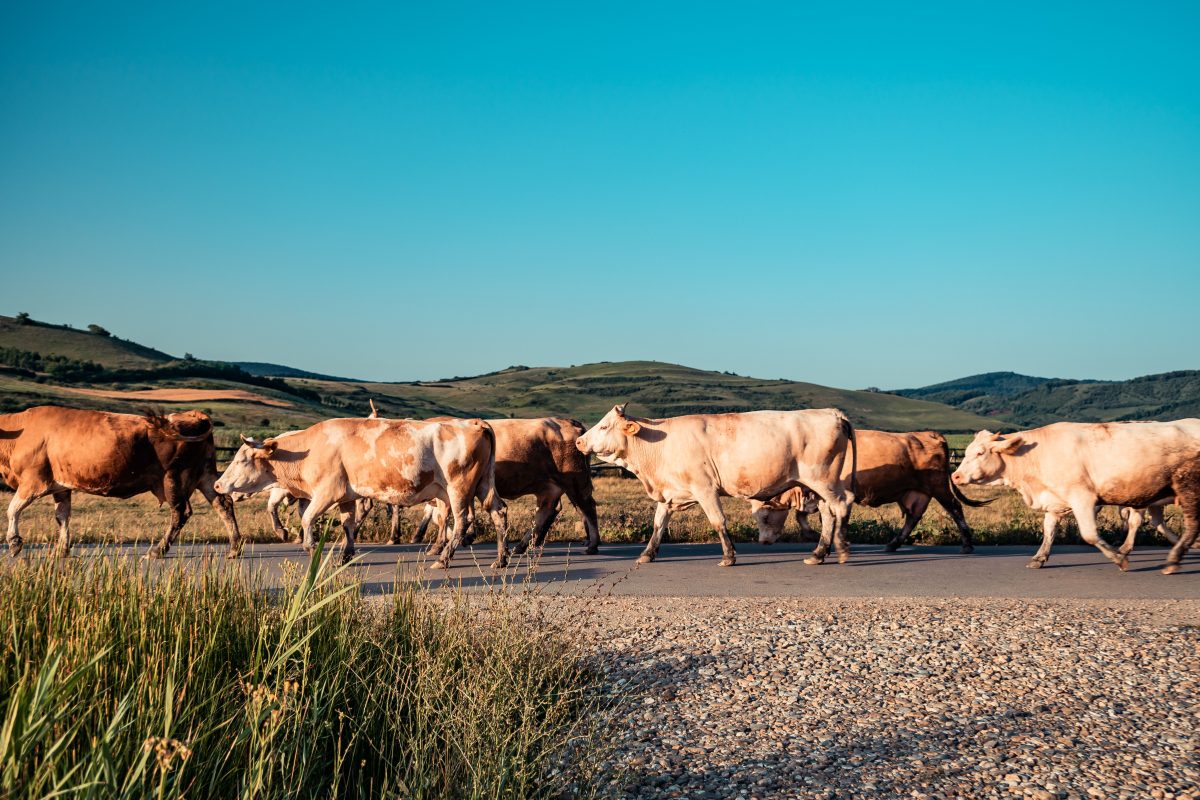
Kenya holds one of the largest national cattle herds in Sub-Saharan Africa — by some counts over 17 million head. Yet in 2023, the country’s entire formal live-cattle export totalled just 30,000 animals, and boxed beef exports came to roughly 500 metric tons. The gap between what East Africa’s rangelands produce and what shows up in a bill of lading is the story of this issue.
01The herd that outgrew its market
Beef is the single largest earner within Kenya’s livestock economy, contributing an average of 65% of total earnings from livestock and livestock products. Pastoral and agro-pastoral systems — concentrated in the arid and semi-arid lands where roughly 36% of Kenya’s population lives — hold about 70% of the national cattle herd and generate some 76% of the total value of beef production. This is a herd economy built by mobile pastoralists, not feedlots.
Yet the value chain remains structurally informal. Kenya operates approximately 2,000 slaughter facilities nationwide — 70% of them basic slaughter slabs and 30% council-run slaughterhouses — against just seven export-standard facilities capable of meeting the sanitary and traceability requirements that Gulf and regional export markets demand. The value chain directly employed 54,799 people in 2023, about 19% of all direct wage employment in Kenya’s agriculture, forestry and fishing sector — but that employment sits mostly upstream of the export gate, in production, herding and local slaughter, not in the processing and certification layer that would let more of the herd reach premium formal markets.
02The corridor customs data doesn’t see
Formal statistics understate the region’s actual cattle trade because so much of it never crosses a customs post as a recorded transaction. The South Sudan–Kenya corridor running through Lokichoggio, Narus and Nadapal moves large-bodied Toposa cattle — prized by Ugandan and Kenyan butchers for their size — into Kenyan terminal markets, largely through informal trader networks rather than licensed export channels. A comparable pattern holds on the Ethiopia side: Ethiopia’s livestock sector supports more than 65% of the population and contributes 12–15% of the country’s total export earnings, yet official livestock export volumes have been declining even as informal export volume has grown exponentially.
The economics explain why informality persists. Along the Somali–Kenya transboundary corridor, a Grade II bovine trades for $100–150 more in Nairobi’s Dagoretti terminal market than in Garissa closer to the border — a margin captured mostly by traders and brokers rather than the pastoralist producers further upstream. Wealthier Somali traders have responded by acquiring ranches near Kenya’s coast to fatten animals before final sale, effectively inserting a domestic finishing stage into what was once a purely cross-border movement.
Traders moving cattle from Narus in South Sudan to Nairobi via Lokichoggio have historically handled volumes in the low hundreds of head per month per trader, with margins dependent on avoiding delays and theft at the border. Because this trade is priced and settled informally, it appears nowhere in Kenya’s or South Sudan’s formal export statistics — even though it materially supplies Kenyan terminal markets and, by extension, Nairobi’s beef supply chain.
03Where the formal export actually goes
The formal channel that does exist is small but distinct in destination. In 2023, Kenya’s meat product exports were valued at Ksh 19 billion (about US$146 million), up 39% from Ksh 11.5 billion the year before. Beyond the Gulf states, Kenya has been actively working to open African destinations — the DRC, Libya, Nigeria, Rwanda and South Sudan — for its meat exports, positioning regional demand as the next leg of growth rather than relying solely on the UAE, Saudi Arabia, Qatar and Bahrain.
| Export category | 2023 volume | Primary destinations |
|---|---|---|
| Boxed beef (fresh & frozen) | ~500 MT | UAE, Saudi Arabia, Qatar, Bahrain |
| Live bovines | 30,000 head | Regional (COMESA/EAC markets) |
| Lamb | 7,000 MT | Gulf states |
| Goat meat | 20,000 MT | Gulf states, regional |
Source: IATP Kenya Livestock Sector analysis, 2025, citing Kenya trade data.
One structural constraint recurs across every export category: Kenya is currently unable to meet its own domestic demand for beef and poultry without imports, even as it exports beef, lamb and goat meat to premium Gulf markets. That is not a contradiction so much as a market-segmentation reality — the cuts and grades that clear export-standard abattoirs move outward to higher-paying buyers, while bulk domestic demand is filled partly by imports, leaving pastoralist producers at the base of the pyramid captured in neither flow at full value.
“The Kenya beef value chain creates jobs through various activities in production, processing and marketing… competing needs for land leads to extensive land subdivision and grabbing, which diminishes cattle grazing areas.”
04What this means for sourcing and finance
For a trading and agri-finance desk operating across Kenya, Uganda, Rwanda, Ethiopia and South Sudan, the beef and cattle sector presents a paradox familiar from other commodities Fava Herb tracks: enormous physical supply, thin formal liquidity, and a pricing structure where the biggest margins sit with intermediaries positioned at the informal-to-formal handoff points — border markets, terminal-market brokers, and the small number of export-standard abattoirs. Regional cooperation on vaccination, disease surveillance, certification and border procedures has been repeatedly flagged as the precondition for converting more of the informal trade into bankable, traceable volume; until that infrastructure closes the gap, working capital and off-take financing anchored to export-standard processors remains the more defensible entry point than lending against herd size alone.
The full Beef & Cattle data brief
This issue’s standalone PDF goes deeper: abattoir-level export certification requirements, a landed-cost comparison across the Nairobi–Gulf and cross-border corridors, drought-cycle herd volatility data, and financing structures for off-take against export-standard processors.
DOWNLOAD THE FULL REPORT →The Fava Herb Livestock Report — East Africa’s Livestock Trade, Decoded: Beef
A five-part market intelligence series on East Africa’s livestock economy — beef & cattle, poultry, goat & sheep, camels, and pigs. Each report pairs a free blog post with an in-depth, licensed PDF data brief covering production volumes, cross-border trade corridors, export markets, and financing risk across Kenya, Uganda, Ethiopia, South Sudan and the wider Horn of Africa.

Book: Returning To Nature’s Ancient Pharmacy -An African Approach To Natural Remedies
What You’ll Discover:
- Daily Herbal Remedies backed by Scripture and tradition
- Natural healing foods like raw honey, fermented drinks, and superfruits
- Uses of animal fats like tallow, ghee, and bone broth
- African healing plants like hibiscus, tamarind, and baobab
- Teas and Adaptogens for stress, energy, and hormone balance
- Spiritual insights on God’s design for healing and wellness
- Practical recipes, homemade remedies, and devotional reflection

