
Agriculture, Trade
Kenya Macadamia: The Premium Nut at a Crossroads
Kenya Macadamia: The Premium Nut at a Crossroads
Africa supplied 58.4% of global macadamia exports by value in 2024 — $414 million of the most expensive tree nut traded at scale. Kenya, the world’s third-largest producer, commands the highest export unit price among tracked origins at $17.67 per kilogram. The market is growing at 9% annually toward $3 billion by 2031. And China — which held a 3% global supply share in 2016 — now holds more than 20% and is growing at 25% per year. The premium window is real. So is the threat. What Kenya does in the next three years will determine whether it leads or follows the macadamia market’s next chapter.
Macadamia is, by most measures of agricultural commodities analysis, an unusual subject. It is not a staple. It is not traded on an ICE futures contract. It does not appear in the FAO food security indices that dominate policy discourse around African agriculture. Yet it is, by value per tonne and by growth trajectory, one of the most commercially significant tree crops Kenya grows — and one of the most structurally complex market environments any East African agricultural commodity faces in 2026.
The complexity arises from a collision of genuinely positive dynamics — growing global premium nut demand, Africa’s dominant supply position, Kenya’s high unit price — and a competitive disruption that is materialising faster than the industry has historically encountered: China’s Yunnan province macadamia orchards, subsidised, structured, and growing at 25% per year, are on a trajectory to reshape the global supply architecture within the next five years.
This analysis examines Kenya’s current market position, the China variable, the AFA quality regulation programme, the value addition imperative, and the strategic choices available to Kenyan macadamia producers and exporters in the Q4 2026 to 2027 planning horizon.
Africa’s Dominance: The Supply Foundation
Africa’s position in global macadamia supply is structurally formidable. Countries in Africa supplied the highest dollar value of exported macadamia nuts in 2024 — $414 million, representing 58.4% of the global total. South Africa and Kenya are the primary contributors, with South Africa holding the largest production volume and Kenya commanding the highest unit price. The top five global macadamia exporters by value — South Africa, Australia, Kenya, mainland China, and the Netherlands (as a re-export hub) — collectively sold 82.8% of all macadamias exported in 2024.
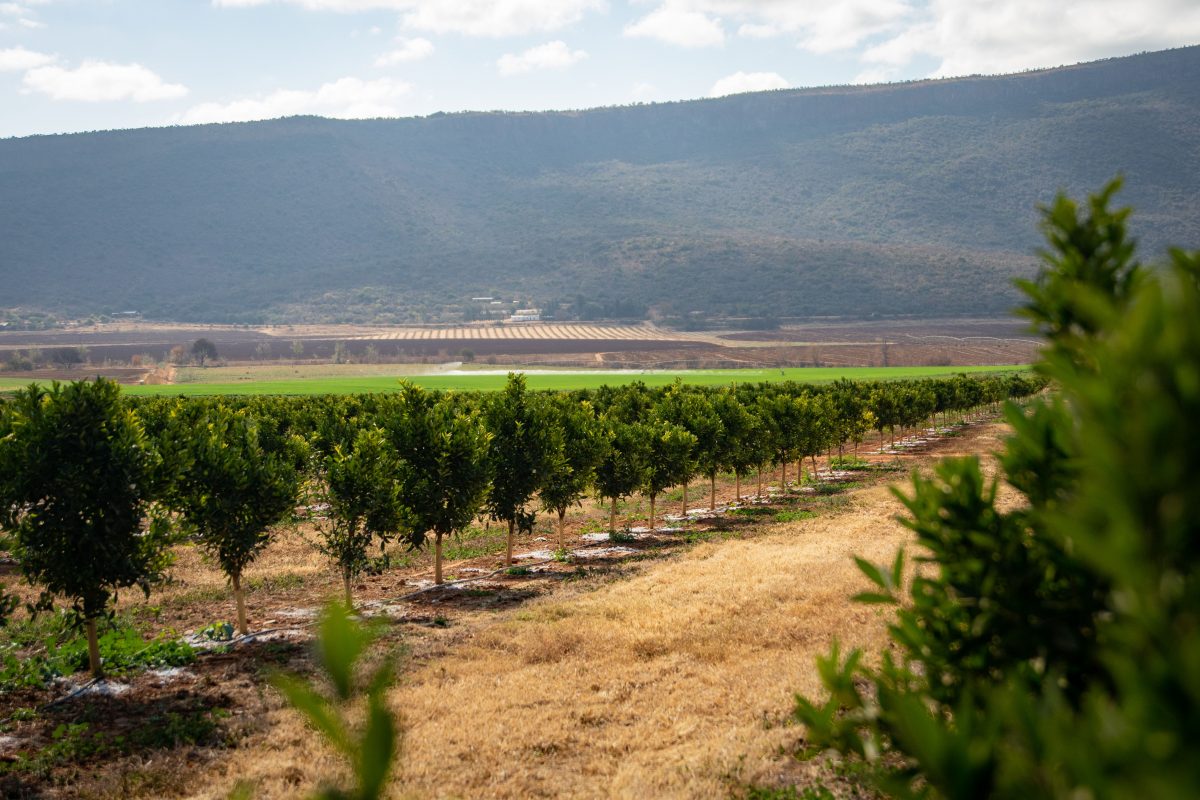
Kenya’s macadamia sector is geographically concentrated in the Mount Kenya zone: Meru, Embu, Nyeri, Kirinyaga, and Tharaka Nithi counties. Production is characterised by smallholder farming, where macadamia is typically a secondary crop planted alongside tea, coffee, or avocado. Critically, the smallholder production model — with minimal pesticide and synthetic fertiliser use — creates a significant proportion of what the industry calls “organic by default” production: macadamia grown to organic standards without formal certification, representing an under-exploited premium positioning opportunity of considerable commercial value.
The China Variable: The Most Consequential Supply-Side Development in a Decade
The story of Chinese macadamia production in Yunnan province is, from a commodity market perspective, one of the most compressed supply disruption timelines in recent agricultural history. In 2016, China held approximately 3% of global macadamia supply. Today, it holds more than 20%. Production is expected to reach approximately 91,000 tonnes in-shell by 2025–2026, a 30% year-on-year increase. At this trajectory, China is positioned to overtake South Africa — currently the world’s largest producer — within the next three to five years.
The mechanism of this growth is significant: Chinese macadamia expansion has been driven by government subsidies, structured farmer training programmes, access to fertilisers and irrigation infrastructure, and an industrial approach to orchard development in Yunnan’s favourable tropical highland climate. This is not organic smallholder growth of the kind characterising Kenya’s sector. It is a state-backed supply expansion designed to serve China’s rapidly growing domestic premium nut consumption market and to reduce import dependency.
China took six years to go from 3% to 20% of global macadamia supply. Kenya has had six years to build the processing, certification, and branding infrastructure that protects its premium position. The question entering 2027 is which investment was made more decisively.Fava Herb Commodities Intelligence · Q4 2026 Analysis
The Chinese supply expansion creates a structural pressure on global macadamia kernel prices that is not yet fully priced into forward planning by Kenyan producers. When China’s Yunnan production reaches scale — and at 25% annual growth, scale arrives faster than most market participants prepare for — the commodity-grade macadamia kernel price will face meaningful downward pressure from Chinese domestic supply competing with imported volumes. The protection against this pressure, for Kenya, is quality differentiation, processing value-add, and premium market positioning that commodity Chinese production cannot replicate. This is the strategic case for acceleration, not complacency.
The AFA Quality Regulation: A Premium Defence Mechanism
The Kenya Agriculture and Food Authority’s ban on the export and transit of raw in-shell macadamia nuts — imposed seasonally and enforced through phenological maturity surveys — is, in the context of the China supply threat, not merely a quality management tool. It is a strategic premium defence mechanism. By preventing the harvest and export of immature nuts — which depress kernel quality, oil content, and shelf life — the AFA regulation protects the price ceiling that Kenyan macadamia commands in international markets. Kenya’s $17.67 per kilogram export unit price, the highest among tracked origins in October 2025, is directly connected to quality reputation. The regulation is the instrument through which that reputation is enforced at farm level.
In January 2025, AFA confirmed an extension of the ban through March 2025. Following month-long maturity surveys across major producing counties, AFA determined that nuts in lower-altitude zones had reached physiological maturity and lifted the ban progressively, region by region. This calibrated approach — applying the ban according to agronomic evidence rather than fixed calendar dates — is the model that premium nut markets expect from a serious producing nation. It mirrors the quality control frameworks of Australian and South African competitors and should be treated as a non-negotiable standard rather than a market intervention.
Value Addition: The Three-Stage Opportunity
Kenya’s macadamia export profile continues to rely significantly on in-shell and kernel bulk exports — the lowest value-capture stages of the supply chain. The three-stage value addition opportunity available to Kenyan processors and exporters spans: first, kernel quality grading and sorting to access premium price tiers in US and European specialty food retail; second, cosmetic-grade macadamia oil production targeting the growing natural cosmetics sector where macadamia oil commands a price premium as a sustainable alternative to argan and jojoba; and third, branded consumer products — roasted flavoured nuts, nut butters, confectionery inclusions — for direct retail in East Africa and through import channels to premium food markets in the Gulf, UK, and Germany.
The Cosmetics Dimension: A High-Growth Demand Vertical
One of the most under-discussed demand drivers for macadamia is the cosmetics and personal care sector. Macadamia oil’s lipid profile — with its unusually high content of palmitoleic acid (omega-7) — closely replicates the fatty acid composition of human skin sebum. This makes it exceptionally effective as a cosmetic emollient and carrier oil, and directly comparable to argan and jojoba in formulation performance. As natural cosmetics manufacturers seek to diversify away from argan — which is geographically concentrated in Morocco and subject to supply constraints — macadamia oil from East Africa offers a legitimate and growing alternative.
The global macadamia nuts market report from Mordor Intelligence specifically identifies cosmetic applications as a significant and growing demand driver, noting that kernel fats allow cosmetic brands to substitute macadamia oil for argan and jojoba while trimming formulation costs. For Fava Herb — operating at the intersection of cosmetic raw materials and East African botanical sourcing — this is a directly relevant market opportunity. Kenyan macadamia oil, processed to cosmetic grade and certified to appropriate quality standards, represents a value-added export product with a price point and margin profile materially superior to bulk kernel trade.
The EU Regulatory Environment: 2027 Mineral Oil Rules
EU member states and the European Commission are finalising binding maximum levels for mineral oil hydrocarbons (MOAH and MOSH) in food, with the goal of adopting rules by 2026 and applying them from 2027 onwards. Macadamia nut processors are identified in the CBI guidance as a sector that should closely monitor these developments. Mineral oil contamination in macadamia can arise from harvesting and processing equipment, packaging materials, and storage environments — and exposure to EU import controls in this area would represent a material market access risk for any Kenyan exporter whose processing infrastructure has not been assessed and upgraded in advance of the 2027 implementation date.
Conclusion: The Window Is Defined by China’s Clock
Kenya’s macadamia sector holds a genuinely enviable market position: the world’s third-largest producer, commanding the highest export unit price of any major origin, operating in the fastest-growing regional market by CAGR, with a global demand trajectory pointing toward $3 billion by 2031. These are structural advantages of a kind that most agricultural commodities do not enjoy simultaneously.
The China variable does not eliminate these advantages. It defines the timeline within which they must be converted into durable competitive moats — through processing investment, organic certification, cosmetic-grade product development, and premium market brand building — before Chinese commodity supply depresses the kernel price floor that currently underpins the entire sector’s economics. That timeline is measured in years, not decades. The clock is running on China’s orchard maturity curves. Kenya’s response needs to be running faster.
DATA SOURCES: Tridge Market Overview Raw Macadamia Nut · CBI Market Entry Guide Macadamia Nuts Europe · Mordor Intelligence Macadamia Nuts Market · World’s Top Exports Macadamia Data 2024 · CCI Nuts Market Update Macadamia (February 2026) · Futurism Macadamia Market Outlook · Kenya Agriculture and Food Authority (AFA) · Valuates Reports Global Macadamia Market · CBI Value Chain Analysis Kenya Macadamia
Is Kenya the world’s largest macadamia producer?
What is the current price of macadamia nuts from Kenya?
Why did Kenya ban macadamia nut exports?
Is China threatening Kenya’s macadamia market position?
What is macadamia used for beyond snacking?
What is the main macadamia producing region in Kenya?
Who are the largest buyers of macadamia nuts globally?


African Commodities Market Intelligence Report — Africa Sesame/ Kenya Macadamia Analysis Q4 2026
Institutional-grade African commodities market analysis covering price outlook, trade flows, and supply-demand fundamentals across East and Sub-Saharan Africa. Quarterly PDF — instant download.

Book: Returning To Nature’s Ancient Pharmacy -An African Approach To Natural Remedies
What You’ll Discover:
- Daily Herbal Remedies backed by Scripture and tradition
- Natural healing foods like raw honey, fermented drinks, and superfruits
- Uses of animal fats like tallow, ghee, and bone broth
- African healing plants like hibiscus, tamarind, and baobab
- Teas and Adaptogens for stress, energy, and hormone balance
- Spiritual insights on God’s design for healing and wellness
- Practical recipes, homemade remedies, and devotional reflection

